

Me at the University of Guelph Elora Research Station.
by Elisabeth Hodgdon, Ph.D. Candidate, University of Vermont
“It’s a story of unrequited love,” says Dr. Yolanda Chen, my Ph.D. advisor, describing our research on pheromone mating disruption. Mating disruption, a pest management strategy that involves inundating a field with synthetic sex pheromone, prevents male insects from finding their mates because they can’t cue in on individual female pheromone plumes. As a result, the males become confused and die without mating. During my time as a Ph.D. student, I’ve spent a lot of time in Vermont and Ontario becoming intimately familiar with the sex lives of swede midge, a serious invasive pest of cruciferous crops.
Swede midge (Contarinia nasturtii, Diptera: Cecidomyiidae) first arrived in North America in the 1990s in Ontario. Vegetable growers started noticing that their broccoli, cauliflower, and cabbage plants were deformed and didn’t produce heads, and that their kale leaves were twisted and scarred. On canola farms, yields decreased because of distorted plant growth. The culprit, identified by Dr. Rebecca Hallett and her research group from the University of Guelph, was a tiny fly called swede midge. The midge, only about 2 mm long as an adult, is seemingly invisible to farmers because it is so small. Within a few years, the midge had made its way from Ontario to Québec and other provinces, and into New York and Vermont.

Female swede midge on cauliflower.
At the University of Vermont, we are the only research lab in the US working on this pest, which is currently causing up to 100% yield loss of organic broccoli and kale in our state. Naturally, it made sense for Dr. Chen to reach out to Dr. Hallett in Guelph for collaboration to investigate management options for this pest. Together, they wrote a grant funded by the USDA to conduct pheromone mating disruption research on swede midge that would take place in both Vermont and in Guelph.
This where I enter into the story. I jumped at the opportunity to join Dr. Chen’s lab, not just because I’m interested in insect pest management, but also because of my continuing love affair with Canada. I grew up in Vermont, a small state that borders Québec and has had lots of influence from our northerly neighbors: a history of French-Canadian immigrants, widespread availability of decent quality poutine, and signage in our largest city en français, among other things. I grew up learning French and visiting nearby Montréal and later went on to study agriculture at McGill University’s Macdonald Campus. I was thrilled at the opportunity to spend more time in Canada during my Ph.D. program.

Me and University of Guelph entomology graduate students at the ESC meeting in Winnipeg last fall: Charles-Étienne Ferland, Jenny Liu, me, Sarah Dolson & Matt Muzzatti (left to right). Photo credit: Matt Muzzatti.
I have gotten to know the English-speaking provinces better through my graduate work as a visiting Ph.D. student in Dr. Hallett’s lab in Guelph. Although many Canadians, especially those from nearby Toronto, describe Guelph as being a “small farm town,” it felt like a real city, especially coming from Vermont. I fell in love with Guelph — the year-round farmers market, old stone buildings, beautiful gardens, and emphasis on local food. The large sprawling farms just outside the city were the perfect places for me to do my research on swede midge pheromone mating disruption, which required lots of space between plots and treatments. Back in Vermont, where the farmland is wedged in small valleys between mountain ranges, we just don’t have the scale of crop production that there is in Ontario.

Josée Boisclair, me, Yolanda Chen, and Thomas Heer (left to right) at IRDA this summer getting ready to transplant broccoli for mating disruption research.
Working with Dr. Hallett opened up many doors and expanded my network in Canada. Last year, my advisor and I started a collaboration with the Institut de recherche et de développement en agroenvironnement (IRDA) in St-Bruno-de-Montarville, Québec. Earlier this winter, I practiced my French and mustered up the nerve to give two extension presentations on my swede midge work to francophone farmers in Québec. I was surprised at the number of people who came up to me after my talk, appreciative that I was making an effort to communicate with them in French rather than English. They were genuinely interested in working together with my research group across the border to help strengthen our research efforts to manage swede midge.
In all the time I’ve spent in Canada (which at this point can be measured in years), I can’t think of a time when I’ve felt unwelcome. On the contrary, I am impressed with how open most Canadians are to foreigners. I hope that we can continue to work together, despite language barriers, differing political systems, and other potential challenges, to gain traction in our efforts to find solutions for swede midge and other shared invasive species in the future.

 Les projets de culture en serre hermétique, et ceux dans les grottes souterraines, furent autant d’échecs. Inexplicablement, l’insecte parvenait à s’infiltrer et à saccager les jeunes pousses. Les tentatives de transmettre un virus aux voraces ravageurs des cultures ou de les empoisonner au moyen de cristaux parasporaux de bacilles furent vaines. L’utilisation de cultivars transgéniques fit chou blanc. L’insecte n’était pas appâté par les attractifs alimentaires synthétiques, ni par des phéromones artificielles développées en vitesse. Il n’existait aucun ennemi naturel apparent.
 Alors que la faim et la chaleur de l’été devenaient chaque jour un peu plus insupportables, que la Terre semblait tout indiquée pour devenir un désert stérile, la mutation se produisit. Une étrange cascade de transformations génétiques reprogrammant l’insecte. La guêpe adopta une nouvelle proie. Un seul et unique animal : l’Homo sapiens. Le jour de la mutation, la ville devint méconnaissable. De violentes secousses sismiques mirent à terre la moitié des bâtiments, des pylônes de lignes à haute tension et des arbres. Ce même jour, les guêpes femelles émergèrent du sous-sol. On aurait dit une version de l’insecte mâle aux dimensions décuplées. Des monstres capables de découper un homme en pièces. Tous ceux qui étaient à l’extérieur, en voiture, ou même un peu trop près d’une fenêtre au moment de l’émergence des femelles, furent condamnés. Ils se firent happer par les essaims si denses qu’on aurait dit qu’il s’agissait d’un seul et unique organisme, quelque Léviathan issu des Enfers. Les militaires déployés sur le terrain pour assurer un semblant d’ordre ouvrirent le feu. Les cibles étaient trop rapides, trop nombreuses. Les survivants se barricadèrent chez eux. D’autres se regroupèrent dans les souterrains du métro, un des rares endroits où les insectes anthropophages ne s’aventuraient pas depuis la mutation. Dès lors, l’être humain fut restreint à un mode de vie nocturne. Car dès que le soleil se levait, des nuées de guêpes affamées s’accaparaient les villes fantômes. Le jour leur appartenait. Et celui qui s’aventurait à l’extérieur lorsqu’il faisait clair était voué à un destin funeste, poignardé de dards comme César de dagues sur le Champ de Mars.
 Dans la métropole anarchique qui comptait désormais moins de dix mille âmes, Jack et Frank partageaient leur appartement avec Chad et Maddie. Il valait mieux se tenir à plusieurs. C’était plus sûr ainsi. Le groupuscule partageait un point commun. Aucun d’entre eux n’avait réussi à rejoindre les siens. La famille de Maddie demeurait en Europe. Les trajets transatlantiques, aériens comme maritimes – s’il y en avait encore –, étaient supposément réservés aux ambassadeurs, aux émissaires ou aux plus fortunés. Chad avait perdu ses proches dans les épidémies. Les centres de soins avaient été pris d’assaut et, sans antibiotiques, leurs chances de survie avaient chuté. La dernière fois que Jack avait eu des nouvelles de son père, de sa mère et de sa sœur, ils étaient en voilier sur les Grands Lacs. La famille avait mis le cap sur Main Duck Island, une petite île isolée et inhabitée baignant dans le lac Ontario, qui servait de colonie de pêche au début du 19e siècle. Des rumeurs circulaient à propos de havres épargnés par les insectes. « Pourvu que Main Duck n’ait pas été touchée. » Privé de moyen de communication, Jack n’en aurait le cœur net que s’il parvenait un jour à y poser le pied. Quant à Frank, même avant les évènements, il n’avait jamais été des plus volubiles au sujet de ses proches.

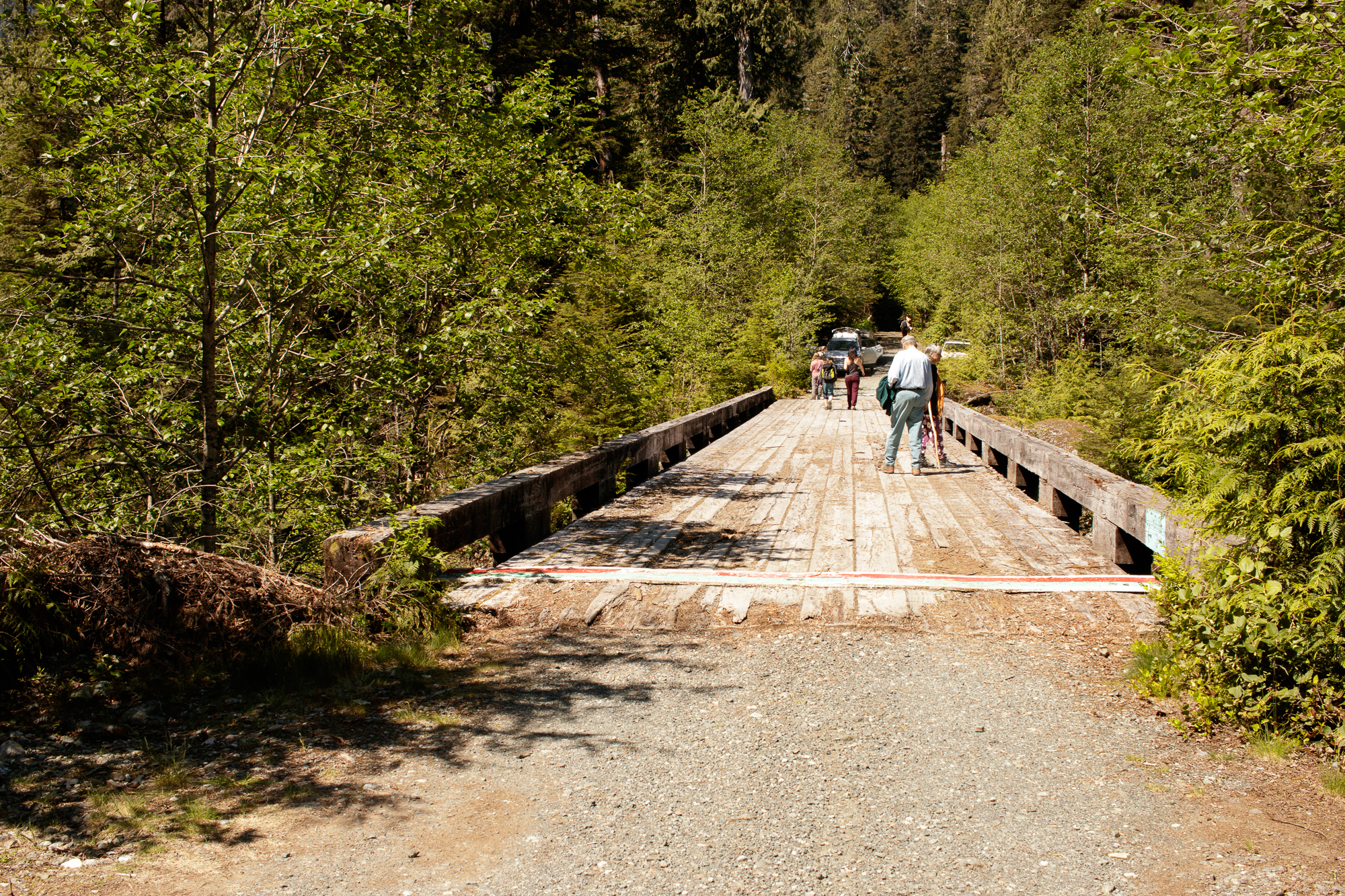 2. Pacheedaht elder Bill Jones walks across the Bridge to Nowhere
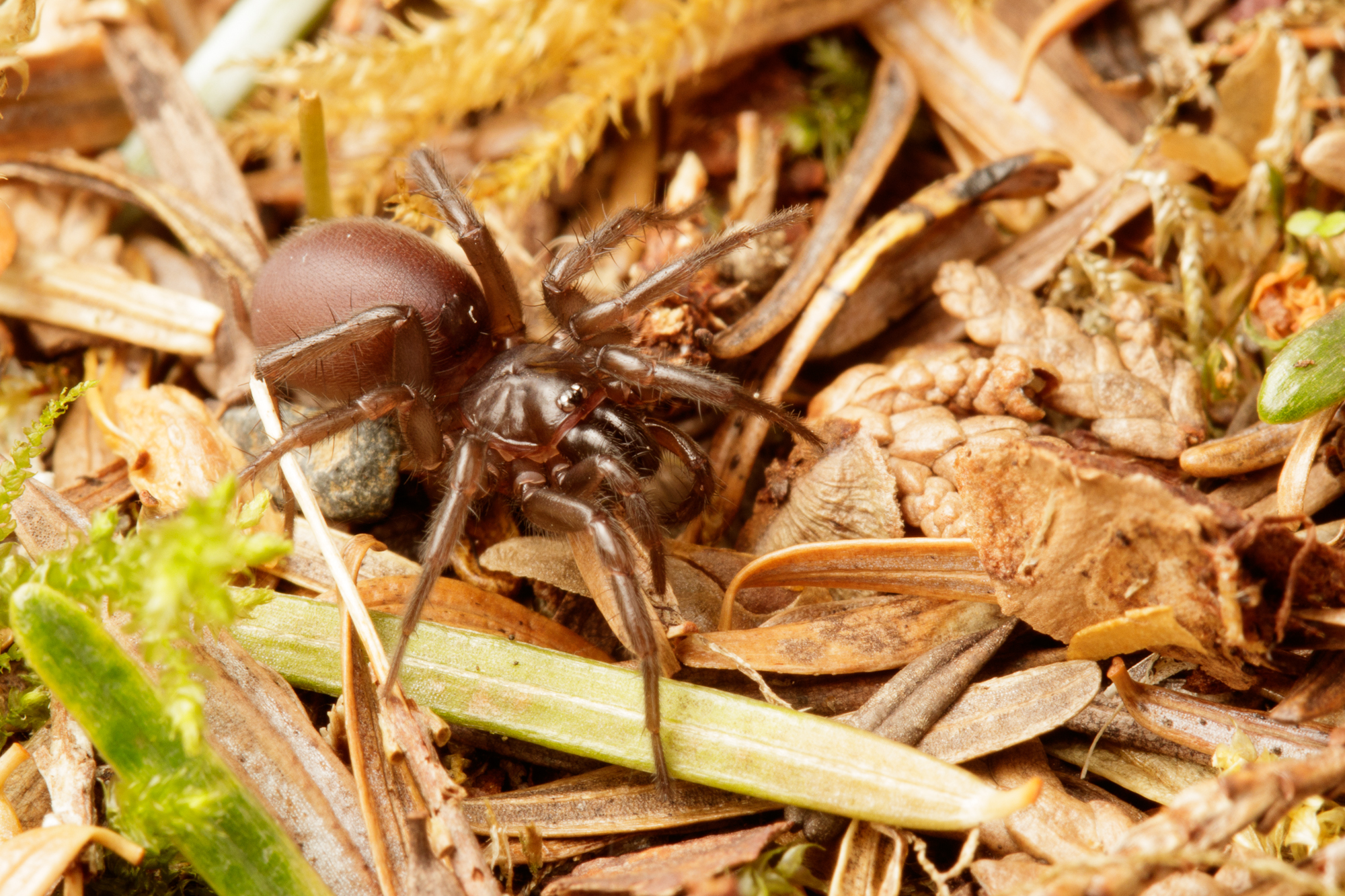 3. Hexura picea, a tarantula relative, brought out of its underground silk tunnel complex for a photo shoot.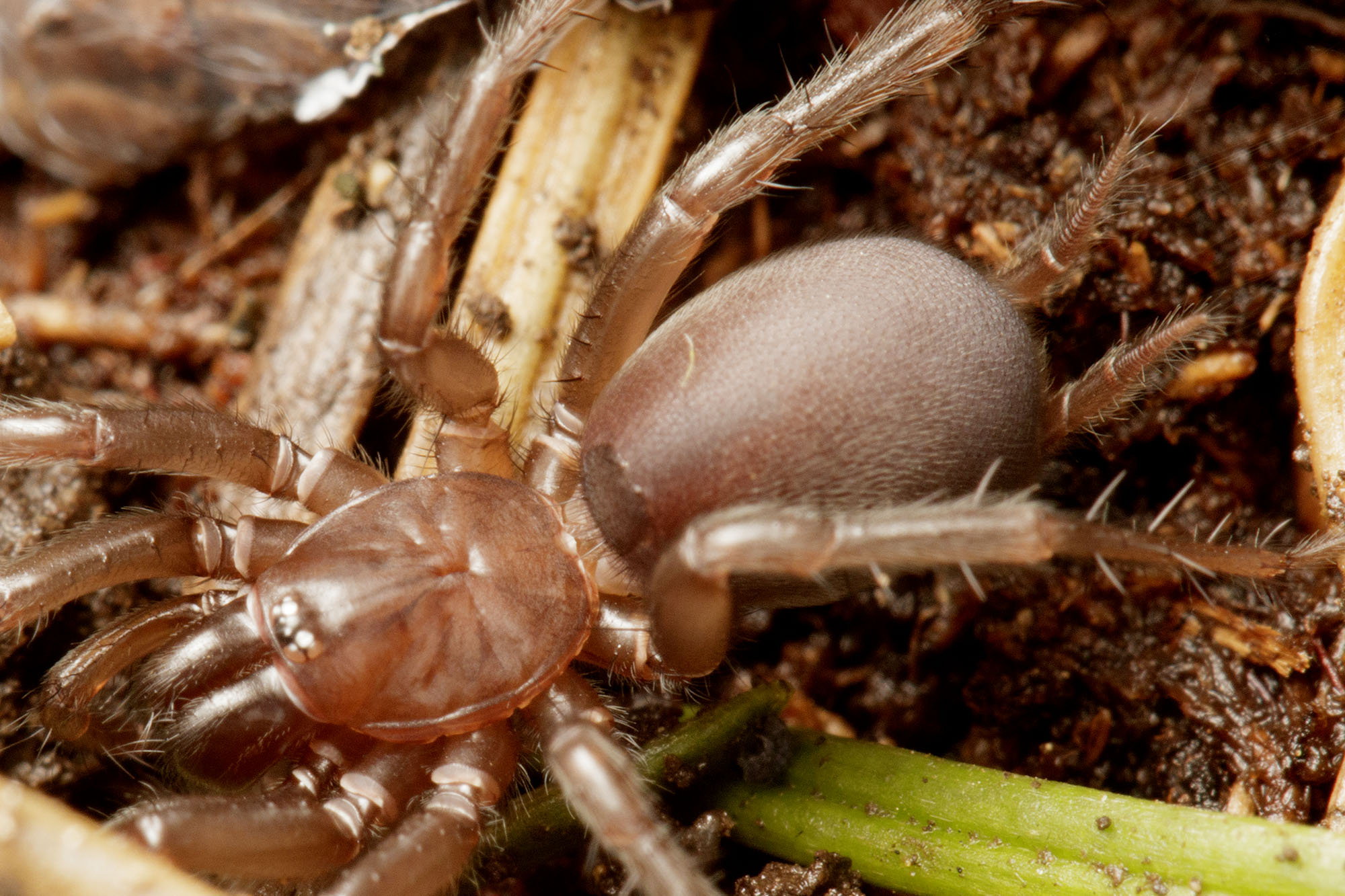
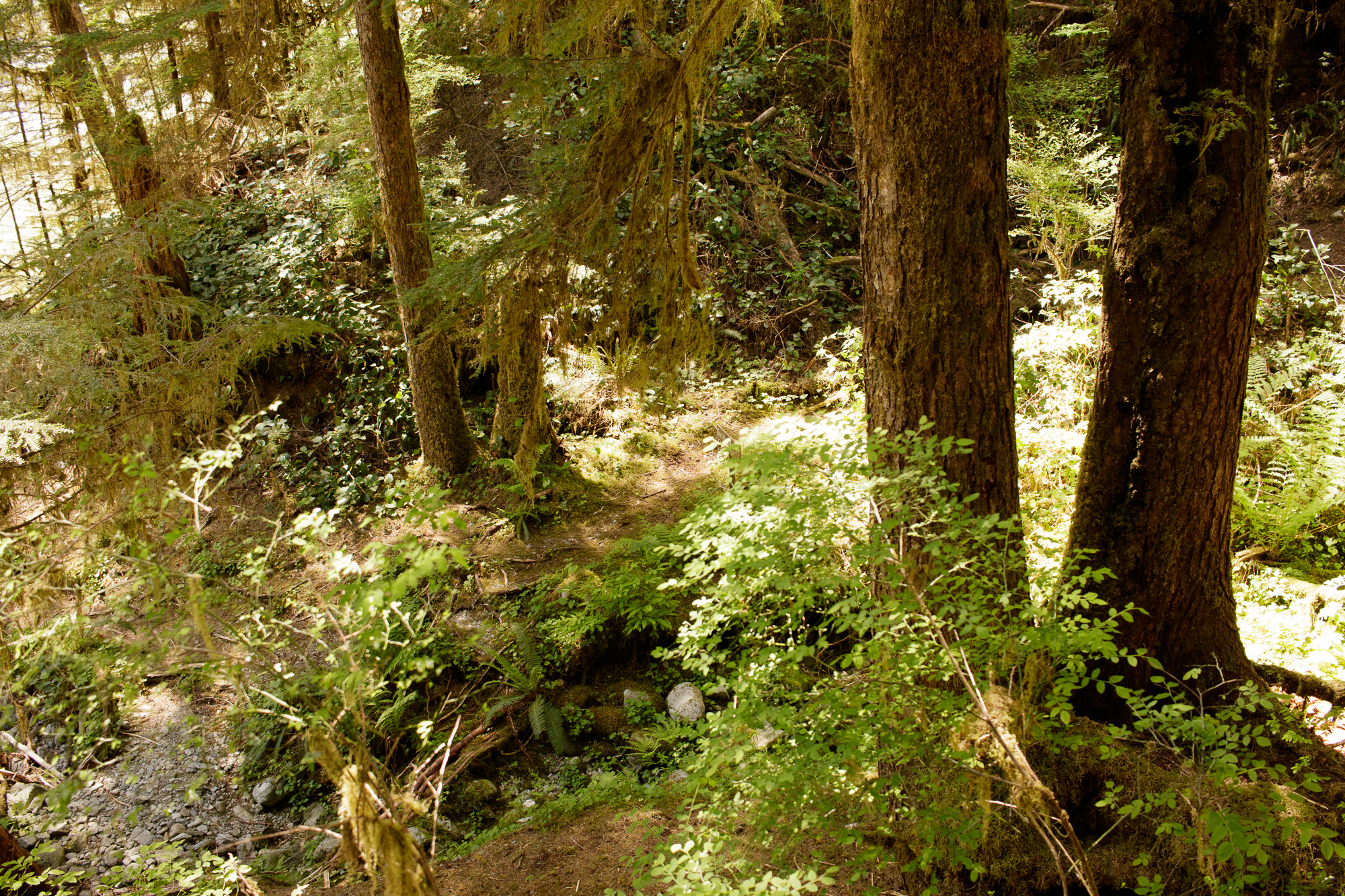 4. Erosion is a gentler process in a forested valley, with trees holding on to what would be a talus slope higher in the mountains. The soils beneath these trees support an extensive food web.
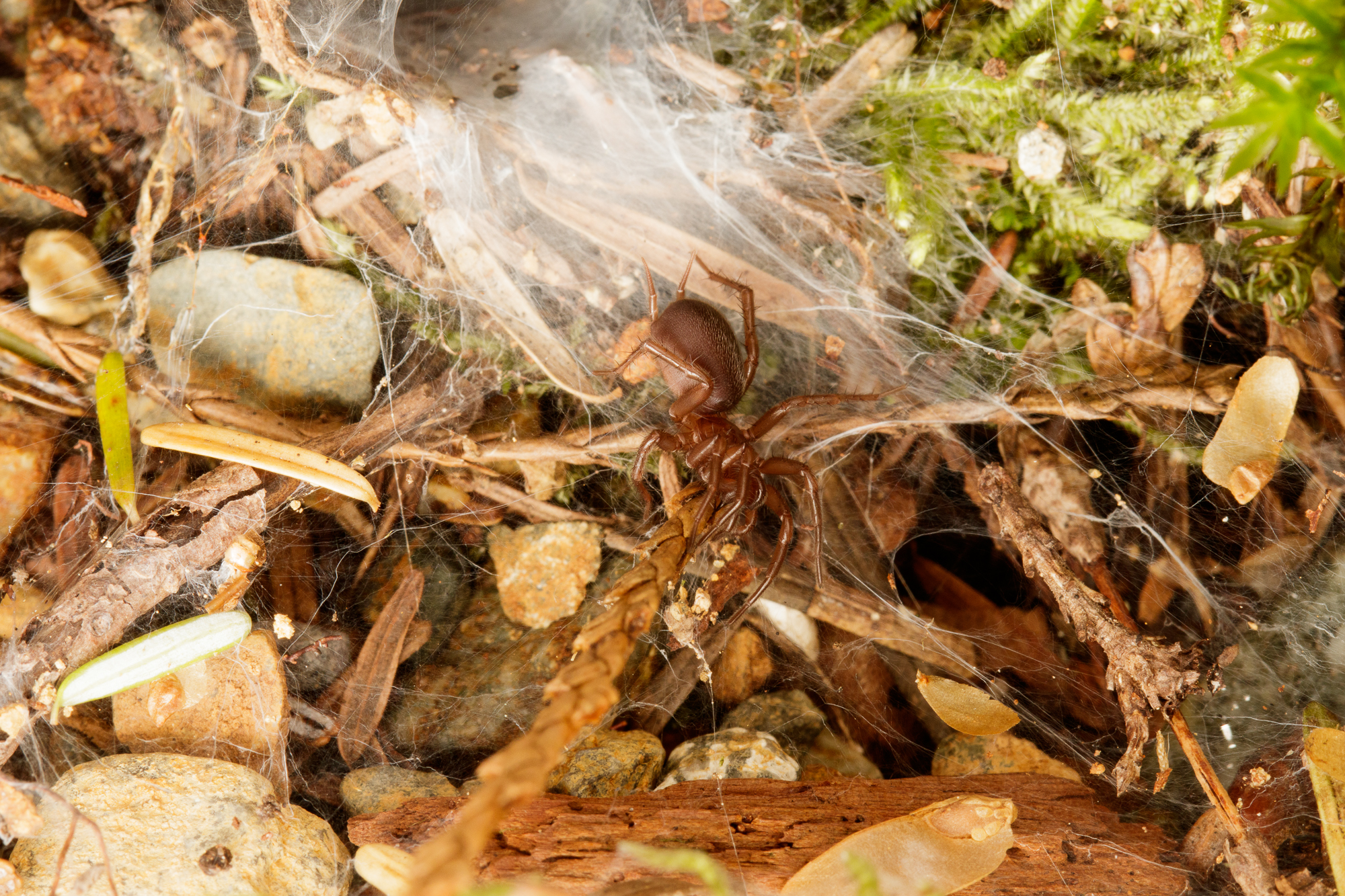 5. Hexura picea emerges from its silken tunnel and onto its “doormat” to “kill” a vibrating cedar twig.
 6. Darren and Claudia picking up pan traps beside the Malaise flight-intercept trap.