As part of a continuing series of Canadian Entomology Research Roundups, here’s what some Canadian entomology grad students have been up to lately:

Ecology and Evolution

Rasoul Bahreini (University of Manitoba) found that honeybee breeding can improve tolerance to Varroa mites which can help minimize colony losses in the winter and improve overwintering performance (Article link). Rasoul also found that reducing ventilation may be an effective way to manage Varroa mite infestation in overwintering honeybee colonies (Article link), and that Nosema infection restrained Varroa removal success in bees (Article link).

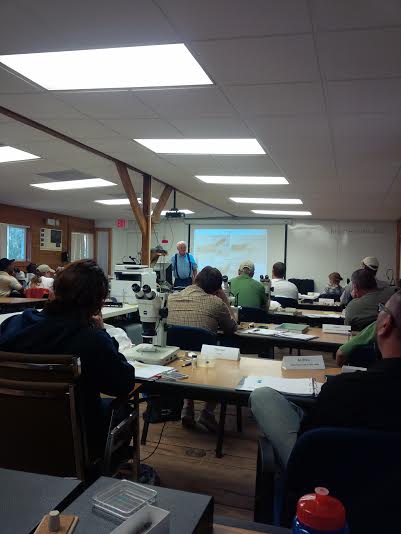
A setup to study the effects of Nosema on Varroa mite removal in honeybees (Photo: Rasoul Bahreini)

A setup to study the effects of Nosema on Varroa mite removal in honeybees (Photo: Rasoul Bahreini)

A novel method based on agar-polydimethylsiloxane devices to quantitatively investigate oviposition behaviour in Drosophila melanogaster was described by Jacob Leung and colleagues (York University) (Article link).

Paul Abram (Université de Montréal) and his colleagues found that a predatory stink bug has control of egg colouration, depending on whether it is laying on the top or underside of leaves.  The pigment protects developing embryos against UV radiation (Article link). See also a related post on the ESC blog, an article in the New York Times, and a dispatch article in Current Biology.

A spined soldier bug female, with the range of egg colours she is capable of laying (Photo: Leslie Abram/Paul Abram/Eric Guerra)

A spined soldier bug (Podisus maculiventris) female, with the range of egg colours she is capable of laying (Photo: Leslie Abram/Paul Abram/Eric Guerra)

Philippe Boucher and colleagues (Université du Québec à Rimouski/Chicoutimi) found that ant colonization of dead wood plays a role in nitrogen and carbon dynamics after forest fires (Article link).

Did you know that ground squirrels have lice – and males have more than females? Neither did we, but Matt Yunick and colleagues (University of Manitoba) recently published an article in The Canadian Entomologist describing their findings (Article link).

Boyd Mori and Dana Sjostrom (University of Alberta) were part of a group of researchers that found that pheromone traps are less effective at high densities of forest tent caterpillars because of competition for pheromone plumes (Article link).

Parasitoid memory dynamics are affected by realistic temperature stress. As part of a collaboration with the University of Palermo (Italy), Paul Abram (Université de Montréal) and colleagues discovered that both hot and cool temperature cycles prevent wasps (Trissolcus basalis) from forgetting. (Article link).

Trissolcus basalis (Hymenoptera: Platygastridae) parasitizing the eggs of its host Nezara Viridula (Hemiptera: Pentatomidae). These parasitoids can detect their host's

Trissolcus basalis (Hymenoptera: Platygastridae) wasps (left panel) parasitizing the eggs of their host stink bug Nezara viridula (Hemiptera: Pentatomidae; mating couple shown in right panel). These parasitoids can detect their host’s « chemical footprints », and even commit them to memory! (Photos: Antonino Cusumano)

Crisia Tabacaru and Sarah McPike (University of Alberta) studied Dendroctonus ponderosae and other bark and ambrosia beetles and found that competition between the beetles may limit post-fire colonization of burned forest stands (Article link).

Marla Schwarzfeld (University of Alberta) found that tree-based (GMYC and PTP) species delimitation models were less reliable in delimiting test species, and the Nearctic Ophion (Hymenoptera: Ichneumonidae) fauna is much larger than previously thought (Article link).

Where have all the mosquitoes gone? Emily Acheson and colleagues (University of Ottawa) found spatial modelling reveals mosquito net distributions across Tanzania do not target optimal Anopheles mosquito habitats (Article link).

Tyler Wist and colleagues (University of Alberta) found that a native braconid parasitoid (Apanteles polychrosidis) uses host location cues induced by feeding damage on black ash but not on green ash (Article link). Also check out the author’s recent post on the ESC Blog!

Fig. 2 Female Apanteles polychrosidis Viereck (Hymenopetra: Braconidae)

Fig. 2 Female Apanteles polychrosidis Viereck (Hymenopetra: Braconidae) (Photo: Tyler Wist).

Agriculture

Sharavari Kulkarni and colleagues (University of Alberta) discovered that reducing tillage could increase the amount of weed seeds consumed by carabid beetles (Article link).

Physiology and Genetics

Sebastien Boutin and colleagues (Université Laval) are beginning to decode the genetic basis of honeybee hygenic behaviour (Article link).

Investigating the cold tolerance of different Sierra leaf beetle life stages, Evelyn Boychuk and colleagues (University of Western Ontario) found that adults are freeze tolerant, the eggs and pupae are freeze-avoidant, and the larvae are chill susceptible (Article link).

From the Authors:

Shaun Turney, Elyssa Cameron, and Chris Cloutier had this to say about their new article published in PeerJ:

Our supervisor, Prof. Chris Buddle, has always emphasized the importance of voucher specimens for our entomology research. He explained that voucher specimens make our work replicable and verifiable. We wondered how widespread the practice of making voucher specimens among those practicing arthropod-based research. We investigated the frequency of voucher deposition in 281 papers, and the factors which correlated to this frequency. Surprisingly, vouchers were deposited less than 25% of the time! Our paper highlights the need for a greater culture of voucher deposition and we suggest ways in which this culture can be cultivated by researchers, editors, and funding bodies.
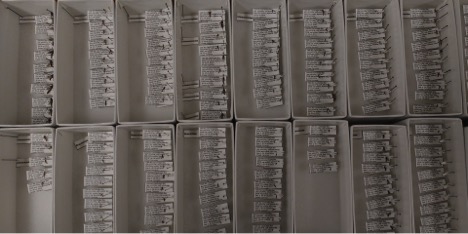
Voucher specimens: an important component of arthropod-based research (Photo provided by Shaun Turney, Elyssa Cameron, and Chris Cloutier)

Voucher specimens: an important component of arthropod-based research (Photo provided by Shaun Turney, Elyssa Cameron, and Chris Cloutier)

From Ikkei Shikano, on two of his recently published articles:

Parents that experience a stressful environment can equip their offspring to fare better in a similar environment. Since this can be energetically expensive for the parent, we asked if parents are exposed to two stressors (nutritional stress and a pathogen), would they equip the offspring for both stressors or would they select one over the other? Cabbage looper moths exposed to a pathogen and poor food quality produced offspring that were highly resistant to that same pathogen. Parents that were given poor food produced offspring that developed faster on poor food. When the parents experienced both stressors, they produced offspring that were resistant to multiple pathogens but did not grow faster on a poor diet (Article link).

Herbivorous insects unavoidably eat large and diverse communities of non-entomopathogenic microbes, which live on the surface of their host plants. Previous studies suggest that consuming non-entomopathogenic bacteria may induce a costly immune response that might decrease the risk of infection by pathogens. But isn’t it wasteful for an insect upregulate a costly immune response to non-pathogens that it ingests with every meal? Within an appropriate ecological context, we show that cabbage looper, Trichoplusia ni, larvae do not induce a costly immune response, indicating that they are adapted to consuming non-pathogenic bacteria that are commonly found on the surface of their host plants (Article link).

From Kate Pare, on an article published by a group of undergraduates taking the Arctic Ecology field course at the University of Guelph:

Our study focused on changes in ant diversity in the area surrounding Churchill, Manitoba between the historic collections made by Robert E. Gregg in 1969 and collections made by students and instructors of the Arctic ecology field course in 2012. Seven ant species were collected in 2012 compared to the five species recorded from 1969. This increase in species richness in the 2012 collection is more likely a result of cryptic molecular diversity that was overlooked in the collection made in 1969 (Article Link, post on the ESC blog).
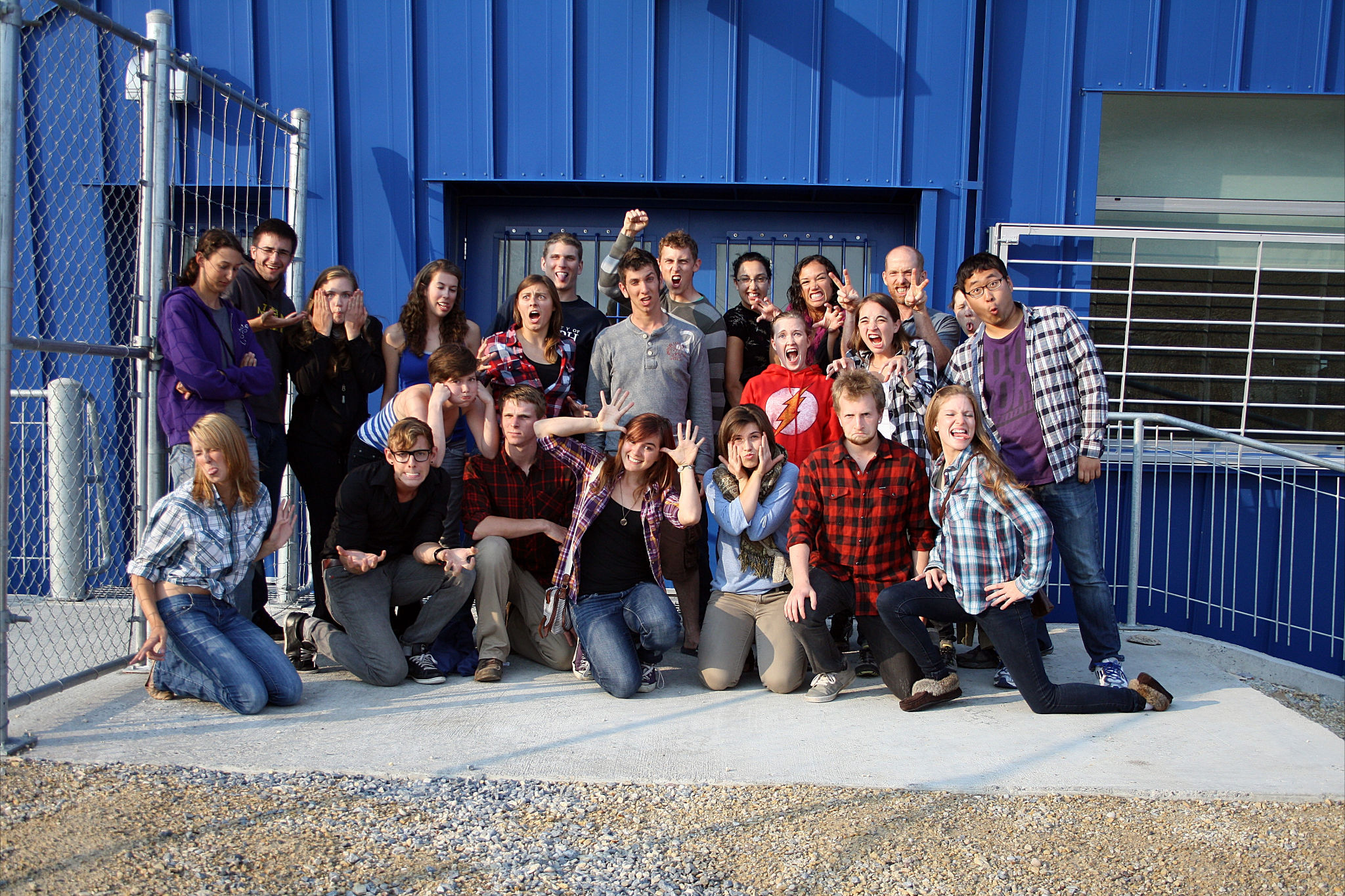
Members of the Arctic Ecology Field course 2015 (Photo: Eric Scott)

Members of the Arctic Ecology Field course 2015 (Photo: Eric Scott).


The ESC Student Affairs Committee will be continuing to help publicize graduate student publications to the wider entomological community through our Research Roundup. If you published an article recently and would like it featured, e-mail us at entsoccan.students@gmail.com.

For regular updates on new Canadian entomological research, you can join the ESC Students Facebook page or follow us on Twitter @esc_students.

By Tyler Wist  

The ash leaf cone roller, Caloptilia fraxinella (Ely) (Lepidoptera: Gracillaridae) (Fig. 1) started to get noticed in the cities of the Western Canadian prairies in 1998, well, in Saskatoon, SK at least. I know this because that summer the green ash, Fraxinus pennsylvanica (Oleaceae), in my front yard was covered in cone rolled leaflets and had not been prior to that year. I had just started working for the City of Saskatoon’s Pest Management Program that year and one of our mandates was urban forest insects…not that there was any budget to control them, but it piqued my interest in urban forest entomology.

Fig. 1 The ash leaf coneroller, Caloptilia fraxinella (Ely) (Lepidoptera: Gracillaridae) adult, pupal exuvium and cocoon.

Fig. 1 – The ash leaf coneroller, Caloptilia fraxinella (Ely) (Lepidoptera: Gracillaridae) adult, pupal exuvium and cocoon.

The following year, Chris Saunders with the City of Edmonton’s Pest Management Program, contacted us in Pest Management and asked if we had seen this cone roller on our ash trees because they had just noticed it on the ash trees in Edmonton. Greg Pohl had identified this leaf miner/leaf roller that year on all species of horticultural Fraxinus in Edmonton and published the identification and some life history of the moth in a 2004 paper (Pohl et al. 2004) along with a brief identification of several parasitoids that were reared from larvae and pupae. The lone braconid, identified to the genus Apanteles and found to be all one species by Darryl Williams of the Canadian Forest Service in Edmonton seemed to be the dominant parasitoid in this complex, but without a species designation not much else about the wasp could be gleaned from the literature.

Chris Saunders suggested that I study the ash leaf cone roller as a master’s project but I digressed from urban forest entomology for a few years into pollination of a nutraceutical/agricultural crop. By this time, the ash leaf cone roller had spread to every ash tree in both cities and often rolled 100% of the leaflets on a single tree. I finally followed Chris’ advice and started a PhD project in Maya Evenden’s lab at the University of Alberta, which was the only lab in Canada that was working on the ash leaf cone roller problem (Evenden 2009). The Apanteles sp. was still the dominant parasitoid and so, along with studies on the chemical ecology of the moth (Wist et al. 2014), I also studied the third trophic level in this system (Wist and Evenden 2013). Of course, I couldn’t go through my studies without knowing what the species designation was for the dominant parasitoid wasp. Fortunately, Jose Fernandez-Triana had just begun his study of the genus Apanteles at the CNC in Ottawa and once Henri Goulet passed along the Apanteles specimens that I had sent for identification he quickly determined that this parasitoid was Apanteles polychrosidis Viereck (Hymenopetra: Braconidae) (Fig. 2).

Fig. 2 Female Apanteles polychrosidis Viereck (Hymenopetra: Braconidae)

Fig. 2  – Female Apanteles polychrosidis Viereck (Hymenopetra: Braconidae)

Apanteles polychrosidis kills the ash leaf cone roller larvae before they can chew their emergence “window” that they use to escape the cone rolled leaflet as adults. This behaviour gives a fairly reliable visual cue that a cone rolled leaflet without a “window” has been parasitized by A. polychrosidis because the other parasitoids in the complex emerge after the cone roller has pupated and created its escape route “window”. Unrolling the leaflet confirms the presence of A. polychrosidis if its telltale “hammock-like” cocoon is present (Fig. 3). This type of cocoon is thought to be a defense against hyper-parasitism but as we found (Wist and Evenden 2013) it doesn’t always work out for A. polychrosidis!

Fig. 3 Apanteles polychrosidis Viereck (Hymenopetra: Braconidae) adult above its cocoon and beside the leaflet cone rolled by Caloptilia fraxinella (Ely) (Lepidoptera: Gracillaridae). Note the emergence hole in the side of the leaflet that the wasp chewed to escape.

Fig. 3 – Apanteles polychrosidis Viereck (Hymenopetra: Braconidae) adult above its cocoon and beside the leaflet cone rolled by Caloptilia fraxinella (Ely) (Lepidoptera: Gracillaridae). Note the emergence hole in the side of the leaflet that the wasp chewed to escape.

To assess the percentage of parasitism by this dominant parasitoid I adapted a method that Chris Saunders and I had discussed years earlier for assessing the parasitism of Apanteles sp. on individual trees. For the initial experiment in our paper (Wist et al. 2015) I sampled leaflets to estimate the density of cone rollers on the tree and estimated the percentage of parasitism by A. polychrosidis on two of the common urban species of ash in Edmonton. Apanteles polychrosidis parasitism was higher on black ash, F. nigra, at all sites than it was on green ash, F. pennsylvanica, which can be called differential parasitism and it seems to be common when host larvae develop on two or more host plants, but had not been well studied on trees. When host density and parasitism were graphed, the relationship of parasitism to host density could be visualized by the slope of the regression line, and on black ash, parasitism was independent of host density on black ash, but was negatively density dependent on green ash. In other words, on black ash parasitism is always high but on green ash, parasitism declines as the density of C. fraxinella increases. I ran the same experiment on green and black ash trees in Saskatoon with the same results but we chose to leave them out of the final version of the manuscript.

I was already studying the chemical ecology of C. fraxinella so this was where we looked for an answer to the differential parasitism in the field. I ran a y-tube olfactometer experiment with black and green ash plant material as the attractive source of volatile organic chemicals (VOCs) and this turned out to be rather tricky. I had three treatments that I wanted to test; undamaged leaflets, leaflets damaged by C. fraxinella and leaflets that were mechanically damaged.

First, I tried to bag small seedlings as the source of the plant smell but I couldn’t seal the system well enough to get reliable airflow through the y tube chamber. I had to switch to using leaflets alone which raises the issue of the smell of the leaflets changing once they have been removed from the tree which could be a problem especially in the “undamaged” treatment. I also needed enough female A. polychrosidis hunting for hosts to give me a decent sample size so I had to collect and emerge as many “un-windowed” cone-rolled leaflets as I could in the summer, and hope that they would actually mate and want to oviposit into host larvae at this point in their lives. Another issue was that I couldn’t coax my summer emerged C. fraxinella to lay eggs on ash seedlings to create leaf-mined treatments. Fortunately, a subset of the local population of C. fraxinella had developed a second generation on the new ash leaves that a dying ash tree puts out in July in an effort to save itself. These leaflets became my leaf-mined treatment. Over two seasons with a lot of juggling and timing of three species I was able to gather enough experimental data with the olfactometer to discover that female A. polychrosidis were differentially attracted to the volatile odour cues from each ash species. In green ash tests, they were attracted to the smell of green ash alone but in black ash tests, they were not attracted unless the leaflets were attacked by its host. The “icing on the manuscript cake” was the GC-EAD results by co-authour Regine Gries that showed that 13 compounds in the volatile profile of ash could be sensed by the antennae of A. polychrosidis, and some of them are known to increase in response to herbivore damage.

I’d say that this manuscript is a starting point for further studies on this interesting parasitism system and could accommodate projects from chemical ecology and landscape ecology perspectives at the very least. In fact, Danielle Hoefele and Sarah McPike have already begun projects in Maya’s lab on the FraxinusCaloptilia-Apanteles system. In case you’d like to know more, here is the link to our manuscript published in Arthropod-Plant Interactions.

151822display

Next September, the largest-ever scientific meeting of entomologists will take place at the International Congress of Entomology (ICE) in Orlando, Florida. For graduate students and early-career entomologists, it will be a fantastic opportunity to meet your peers from all over the world, present your research in a high-profile setting, and scout out potential study or career opportunities.

While you might be thinking that it’s an awful long time from now, and that there’s that pesky thesis that you have to get written, there are two important deadlines coming up soon that you should be aware of:

1. Travel Awards for Students and Early-Career Professionals

The international branch of the Entomological Society of America is giving a total of $50,000 worth of awards to students from outside the USA to attend ICE 2016.

Find detailed information about these awards here. Note that you need to be a member of the ESA to apply, that and membership will cost you between $50 and $150. If you plan to apply, you need to act fast – the deadline for application is September 1st, 2015.

Also note that the Entomological Society of Canada will also have a student and early-career professional travel awards program to assist with attendance at ICE. Information about these awards will be available soon!

2. The International Graduate Student Showcase (IGSS)

The Graduate Student Showcase, which has become a staple of ESC annual meetings, is coming to ICE 2016! Don’t miss this opportunity to present your finished research project alongside the top graduate students in entomology from around the world.

To apply, you need to be defending your MSc or PhD thesis between September 30, 2015 and September 30, 2016.

Find more information about the IGSS here.

The deadline for IGSS applications is October 31, 2015.

cows

Eloise Rowland, graduate of the Gries Lab of Simon Fraser University was recently recognized by the Royal Entomological Society for the best paper published in the journal Physiological Entomology in 2013 and 2014. This paper, part of Eloise’s MSc work, examines the role of sound in the sexual communication of the gypsy moth, Lymantria dispar.  It was coauthored by Peter Belton, Paul Schaefer and Gerhard Gries and is really a great contribution! Check it out!

Rowland E, Belton P, Schafer PW, Gries G. 2014. Intraspecific acoustic communication and mechanical sensitivity of the tympanal ear of the gypsy moth Lymantria dispar. Physiological Entomology 39(4): 331 – 340. DOI: 10.1111/phen.12080

elo ill

Two student members of the Entomological Society of Canada have videos entered in the NSERC-CRSNG Science, Action! competition. The contest, open to students across Canada, aims to share NSERC-CRSNG funded research through 60 second videos, and offers a cash prize of $3,000 to the winning entries. The first round of public voting is now open, and both students would appreciate your support by viewing and sharing their entries, helping highlight entomology research in Canada.

Michael Hrabar,  MSc Student at Simon Fraser University

Bed bugs have become a global epidemic. Detecting infestations early is the key to successful eradication. Scientists at Simon Fraser University have identified the bed bug aggregation pheromone. They extracted the pheromone from the bugs’ feces and cast cuticle, and analyzed extracts by state-of-the-art technology including gas chromatography-mass spectrometry and nuclear magnetic resonance spectroscopy. In lab and field bioassays, they demonstrated that a 6-component pheromone blend is highly effective in attracting bed bugs to, and retaining them in, cardboard shelter traps. The pheromone technology can now be developed as a tool to help detect, and possibly control, bed bug infestations.

https://youtu.be/xRsh-hInyR0

Morgan Jackson*, PhD Candidate at the University of Guelph

Flies, two-winged insects in the order Diptera, are an important and understudied component of Canada’s biodiversity. With nearly 8,000 species known from Canada, and likely as many more still to be discovered, flies impact our lives every day, either as pests and disease vectors, or as pollinators, decomposers and in many other ways. At the University of Guelph Insect Collection, we’re working to understand the diversity of flies from coast to coast and beyond our borders by studying their natural history and taxonomy using comparative morphology and DNA. By combining fieldwork with museum-based research, we’re helping catalog Canada’s dipteran diversity.

https://youtu.be/BBWC3quX_vk

*Disclaimer: Morgan Jackson is an administrator of the ESC Blog.

By Sabrina Rochefort, MSc student, McGill University.

Early in my undergraduate program at McGill University, I was looking for an opportunity to volunteer in a lab, where I could feed my need to learn and make new discoveries. That led me to Terry Wheeler’s lab; he was the teacher for my evolution class at that time.

I had a strong interest in evolution and paleontology, and was hoping to pursue that field. But Terry informed me that volunteering in his lab did not involve studying fossils, but instead studying tiny insects. Curious and willing to learn about insects, I decided to give it a try! At the Lyman Museum, I quickly discovered that entomology is a field of study with great opportunities and with an infinite number of projects. Besides studying for my degree, and working on weekends at Tim Hortons, I was volunteering up to 12 hours a week, between and after classes, pinning flies and identifying them. I couldn’t lie to myself anymore, I had developed a strong passion for entomology!

??????????

Identifying flies at the Lyman Museum. Photo by E. Vajda


Volunteering gradually transformed into a student job. It’s then that Terry introduced me to the fly family Piophilidae, commonly known as the Skipper Flies. I spent numerous hours familiarising myself with piophilids, reading literature, learning to identify them, their ecology, etc. All that knowledge that I acquired in entomology during my undergraduate studies gave me a great opportunity: the chance to pursue graduate studies. I am presently undertaking a Master’s project on the taxonomy and phylogeny of Piophilidae.

Image 2

Collecting piophilids on decaying mushrooms in the Yukon. Photo by E. Vajda


Now, let’s put a little less attention on my background and a little more on this wonderful family of flies and my project!

Piophilids are small to medium flies (3 to 9mm), which are abundant and diverse, especially in the northern hemisphere. To date, there are 82 described species worldwide. They mainly feed and reproduce on decaying organic matter. This family is of interest in several scientific domains such as forensic entomology (for their presence on carrion), in behavior (for their unique sexual selection strategies) and in biodiversity (for their interesting geographic distribution in the arctic). Several species are also pests in the food industry. The study of their taxonomy and phylogeny is essential for several reasons: to be able to identify specimens found in studies; to document the geographic distribution of species; to establish their phylogenetic relationships; and to learn more about their biology and ecology. The main objectives of my thesis are a taxonomic revision of the Nearctic Piophilidae and phylogenetic analysis of the genera worldwide.

Liopiophila varipes, a piophilid species commonly found on carrion. Photo by S. Rochefort

Liopiophila varipes, a piophilid species commonly found on carrion. Photo by S. Rochefort

A statement that is often repeated in our lab is that it is important for taxonomists and ecologists to collaborate, and that the outcomes of our taxonomic projects should be useful not only for taxonomists but also to other entomologists in other fields of expertise. And that is right! For taxonomy to make sense, it is essential that other researchers be able to understand it and use our work. This can be done by providing them with “working tools” such as identification keys which are simple and adapted to a specific need. It is for that reason that, as a side project to my thesis, I decided to collaborate with Marjolaine Giroux, from the Montreal Insectarium, Jade Savage from Bishop’s University and my supervisor Terry Wheeler on a publication and key to the Piophilidae species that may be found in forensic entomology studies in North America. That paper has just been published in the Canadian Journal of Arthropod identification. We reviewed some of the problems associated with identification of piophilids, and the need to develop a user-friendly key to the species. We wanted to create a key with lots of photographs, that was user-friendly and simple for non-specialists, and that would be published on-line and open access. Because of this, CJAI was the ideal journal for our paper.

Seeing this publication completed early in my graduate studies is a great accomplishment for me. It gave me the opportunity to share my knowledge and make taxonomy more accessible to students, amateur entomologists and researchers in the academic and scientific community. Undertaking a project in a less familiar field which is linked to your expertise is a very gratifying experience which I strongly encourage other students to try. From this experience, I acquired new skills and knowledge, I made connections with researchers in other fields of study and I was able to make more connections between my Master’s thesis and other subjects in entomology.

Reference

Rochefort, S., Giroux, M., Savage, J., Wheeler, T.A. 2015. Key to Forensically Important Piophilidae (Diptera) in the Nearctic Region. Canadian Journal of Arthropod Identification No. 27: January 22, 2015. Available online

The following post is by Chloe Gerak, a Masters student at UBC who completed an undergraduate project at Simon Fraser University in the Gries lab.This past weekend, she won the top prize for an undergraduate talk at the Annual General  Meeting of the Entomological Society of British Columbia with a talk entitled « How the false widow finds true love ». Photos by Sean McCann.

IMG_2189

A male Steatoda grossa. These spiders have stereotyped courtship behaviour involving stridulation of an organ located dorsally between the cephalothorax and abdomen.

For approximately eight months, I studied the courtship behaviour and chemical communication between male and female false widow spiders, Steatoda grossa. Prior to studying them in Prof. Gerhard Gries’ lab at Simon Fraser University, I had never even heard of this species!

IMG_2163

Female Steatoda grossa on her web.

My mentor Catherine Scott and I had collected juvenile and mature false widow spiders around the basement of the biology wing at SFU… and let’s just say we didn’t have a lack of specimens to collect. Almost every baseboard we turned over or corner we searched, we would find these little guys and collect them individually into petri dishes. These formed the nucleus of our laboratory colony which we reared for behavioural experiments.

IMG_2209

A  common nickname for Steatoda grossa is the “cupboard spider,” which I find extremely appropriate considering these spiders seem to love dwelling in dark corners. Since they are so abundant around SFU, and I had never even seen one before this, I think people should not be frightened by cohabiting with them… likely, you won’t even know they are there!

IMG_2193

10718342_10101031748331079_1823563364_o

Sarah Loboda of McGill University, a double runner-up! Photo by Miles Zhang.

In my last post, I shared some thoughts about the value of the President’s Prize at Annual Meetings of the Entomological Society of Canada. This time, with the help of Tyler Wist, I present the names and categories for each of the winners and runners-up.

I would like to congratulate all of these fine scientists, and invite each of them to share a bit about their work here on the ESC blog.

Oral Presentations

Bees and Pollination

Winner:

Veronika Lambinet (Simon Fraser University), with M. Bieri, M. Hayden, and G. Gries.

Bee talk – Do honeybees use the earth’s magnetic field as a reference to align their waggle dance?

Honourable mention:

Danae Frier (University of Regina), with C. Sheffield.

Bumblebees do it better: the importance of native bees to the pollination of haskap crops.

Biodiversity and Conservation

Winner:

Sebastian Ibarra (Simon Fraser University), with S. McCann, R. Gries, H. Zhai, and G. Gries.

The wrath of the bald-faced hornet – pheromone-mediated nest defence.

Honourable mention:

Seung-Il Lee (University of Alberta), with J. Spence and D. Langor.

Variable retention harvesting and saproxylic beetle conservation in white spruce stands of the boreal ecosystem.

Sarah Loboda (McGill University), with J. Savage, T. Hoye, and C. Buddle.

    Ecological and evolutionary responses of Arctic flies to recent climate change in Zackenberg, Greenland.

Arthropod Biology

Winner:

Sharleen Balogh (University of Northern British Columbia), with D. Huber and S. Lindgren.

Host selection of lodgepole pine (Pinus contorta) by the Warren root collar weevil (Hylobius warreni).

Honourable mention:

Aldo Rios (University of Manitoba), with A. Costamagna.

Contribution of soybean aphid alates to colony fitness under predation.

Pest Management

Winner:

Tina Dancau (CABI, Switzerland), with T. Haye, P. Mason, and D. Gillespie.

Mortality factors affecting the diamondback moth (Plutella xylostella) in continental Europe: a preliminary life table analysis.

Honourable mention:

Jon Williams (University of Guelph), with H. Earl and R. Hallett.

Laboratory investigations of swede midge, Contarinia nasturtii, oviposition and damage symptoms to canola.

Posters


Winner:

Sabrina Rochefort (McGill University), with T. Wheeler.

Taxonomy and diversity of Parapiophila (Diptera: Piophilidae).

Honourable mention:

Sarah Loboda (McGill University), with C. Ernst and C. Buddle.

Yellow pan traps versus pitfall traps: best monitoring tool for ground-dwelling arthropods in the Arctic.

10709731_10101031748326089_503656089_o

Sabrina Rochefort – winner of the President’s Prize for best poster

At the recent ESC/ESS JAM in Saskatoon, not only were we treated to some great science and camaraderie, but the beloved institution of the President’s Prize sessions for student talks and posters provided some of the most stimulating and exciting times. This was my first year not being in the competition, and I would like to offer my views on the subject.

1) The President’s Prize encourages excellence: Students are definitely motivated to deliver polished and professional presentations in the hopes that their efforts will be recognized publicly. This reaches further than the conference, to encourage students to vet their talks and posters within their laboratories and departments in formal and informal settings in order to make the best presentation possible. This can only be a good thing.

2) The recognition is important: this prize, although modest financially, has amazing value as something to put on one’s CV. This enhances the career prospects of the winners and also the recognition that conference travel for students is worth funding within departments. Again, the value of this prize reaches much further than the conference, as students returning with the tangible benefits of a prize winning talk encourages others to make it a priority to attend and give an excellent talk next year.

The President’s Prize and the more recent innovation of the Graduate Student Showcase are thus valuable to the society as a whole. By encouraging and recognizing the efforts of students who attend our conferences to present well-polished research results, we promote excellence in scientific communication. We can all learn from the skill and innovation of these students!

With all of this in mind, I would like to make some recommendations:

1) For every conference, pre-publish the scoring rubric to be used by the judges. This will ensure that students entering a talk or poster know what points they have to hit to make their talk a candidate for the prize. These rubrics should not penalize creativity on the part of the students or discretion on the part of the judges, but should ensure that there is a baseline for what is expected.

2) At every conference, formally recognize runners-up in every session: It costs nothing but a bit of extra time during award presentation, but the chance to bestow recognition on a few more students should not go to waste. Many sessions have many excellent talks, and to send an excellent presenter home with nothing does no one any good.  It has been a bit hit and miss in recent years at ESC meetings with regards to runners-up, and I think it should be the case that every conference includes this important recognition.

3) Send all competitors home with the judging sheets. This is a bit more onerous on the part of the judges, but the judges can definitely jot down some notes on their scoring sheet and show the tally for how well the talk lived up to the rubric. This is important to show that the criteria used to score the talks informed the decision. More importantly, it allows students to see how well their talk met the judges’ expectations, and to improve their presentations for the next year. This has been done at a couple of ESC meetings over the last few years and as far as I know, students found the feedback they got very valuable and were able to use it to improve their science communication skills.

 Thanks to Mile Zhang for photos of the poster competitors, and to Catherine Scott for helpful suggestions. Congratulations to all this year’s winners, runners-up, and competitors!


IMG_0448

IMG_0447IMG_0449

10718342_10101031748331079_1823563364_o

IMG_0444IMG_0725 IMG_0742

The following is a guest post by Memorial University student Andrew Chaulk. Andrew is looking into mosquito ecology an biodiversity . He recently attended a short course offered by the University of Florida’s FMEL in Vero Beach. 


Just off a main road running through a small town in Florida, a small group of enthusiastic folks, both local and foreign, sit focused. Eyes trained on minute hairs, scales, and a plethora of other physical traits, we worked diligently; all of us training to identify the 174 species of mosquitoes which call North America home. What brought us all together? The advanced mosquito identification and certification course offered by the Florida Medical Entomology Lab in Vero Beach, Florida.

toxo

Toxorhynchites, one of the « good guys ». These mosquitoes won’t bite you, and their larvae are predators on other container-inhabiting mosquito larvae. Photo by Andrew Chaulk.

First offered in 2000 as a training course for mosquito control personnel in Florida, the course has since opened its doors, inviting students from across the United States and internationally. This year’s class comprised of 21 students, four of which were Canadian (including myself, Kate Bassett – a fellow Master’s student, and our supervisor, Dr. Tom Chapman), and one student had travelled all the way from Nigeria to receive this internationally recognized accreditation.  Led primarily by Dr. Roxanne Connelly, a Louisiana born entomologist who specializes in mosquito biology and mosquito borne diseases, the course is the only one of its kind and covers the principles and skills needed to identify all known mosquito species in North America north of Mexico in a fast-paced and in-depth manner. The taxonomically based course is divided into two sections, with the first week covering adult mosquito keys, and the second, taught by retired entomologist George O’Meara, covers the larval keys.

class

George O’ Meara leading the class. Photo by Tom Chapman.

Having come all the way from St. John’s Newfoundland, we arrived in Vero Beach to a wonderful break from our typical early spring weather. The course, which ran from March 3rd to 14th, began with some brief introductions and a tour of the FMEL property before getting down to business. Each section of the course comprised of four days of instruction and practice with the keys followed by one morning of exams – one written and practical exam per section. The in class material was often broken up by opportunities to use a wide variety of mosquito collection methods. Demonstrations were also provided concerning methods of specimen preparation and during one such demonstration I was even given the opportunity to show the class how minuten pins are used since this method is not commonly used at the FMEL. Overall, while the learning curve for the course was rather steep and the instruction fast paced, there was an interesting combination of anxiety and comfort brought about by the very friendly and supportive atmosphere which I think created an excellent learning experience.


trap

Greg Ross demonstrates some of the trapping and surveillance equipment, including lard can traps and CDC light traps. Photo by Andrew Chaulk.

Reflecting on my experience after returning to the snowy St. John’s, one unexpected yet valuable aspect of the course I took home with me was learning about the variety of backgrounds my peers had come from and how these all culminated in our taking the course together. From graduate students to naval officers, and mosquito control employees to research and medical scientists, our class was quite an interesting mix. While the foundation for my own interest in mosquitoes stems from my work for a graduate degree in biology at Memorial University of Newfoundland, I now have a much broader perspective on the amount of effort and resources that are invested in mosquito research and control.

specimens

Students work with FMEL’s teaching collection, which is extensive. Photo by Tom Chapman.

Taking everything into account, I see this course as being one of the most valuable experiences of my graduate experience to date. Still in the first year of a Master’s degree I am working on a project centered on the mosquitoes of our province. I am concerned with questions surrounding the biodiversity of these insects in our province, their ecology and behaviour, as well as identifying possible introduction pathways of novel species. Being able to see firsthand what the results of research in this area can develop into has provided perspective for my own project and also has given me ideas of where my research can take me in the future. My expectations for this course were well exceeded and I would recommend this course to anyone who is working with these insects in any aspect.

If you would like some more information concerning course content and registration for next year’s class please visit here.