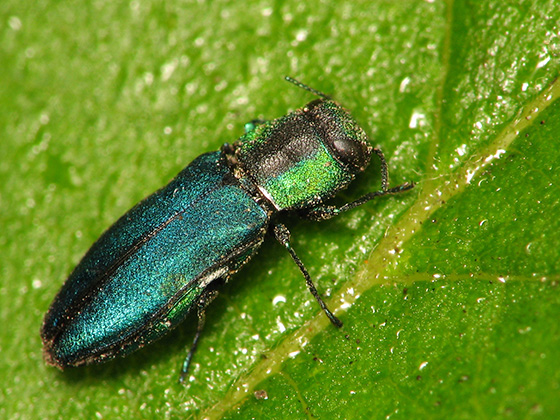
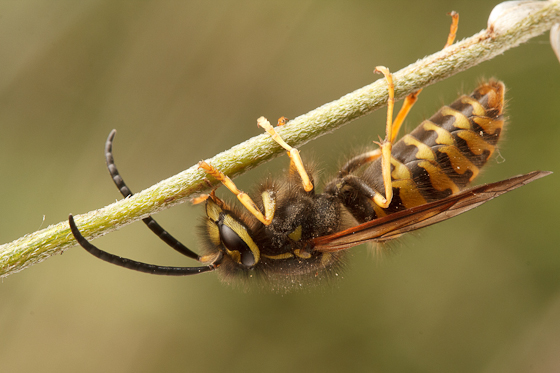
14424477386_fec5b07470_o

The following is by Dr. Staffan Lindgren, ESC President

Christmas has come and gone and it is now closing in on the end of 2014. Most of us are busy with family and friends, and although winter seems to be spotty across the country (it is plus 3 oC in Prince George as I write this), our insect friends are mostly hibernating – at least those that don’t share our homes (like the pesky fruit flies and other small flies from my wife’s indoor worm compost I am constantly batting!) It is much more than just the end of another year for the Entomological Society of Canada, however. Over the past few years, largely in response to an increasingly challenging fiscal environment, the ESC is continuing the transitioning into a new era. Many of our colleagues have put in a lot of their time to make this happen, and I want to highlight a few of them here.

The transition started in 2011 with the move of The Canadian Entomologist from NRC Press to Cambridge University Press. This should restore TCE to its former glory, because we no longer have page charges, and colour plates are also free of charge. The hard work of former Editors-in-Chief Robb Bennett and Chris Buddle, as well as current EiC Kevin Floate and the Publications Committee made this move possible. Another big change has been our transition to the new Canada Not-for-profit Corporations Act. I want to thank Alec McClay, whose diligence alerted us to the requirement for transitioning in a timely manner. Thanks to the invaluable help from the painstaking and detailed work by Gary Gibson and Bill Riel the ESC made a smooth transition and has been operating under this legislation for some time now. As is often the case, there are unforeseen complications with these types of bureaucratic exercises, and one of them is that we have to change the end of our fiscal year to be in compliance with the legislation.

The change that will be most tangible for members happened this fall. At the Annual General Meeting of the ESC on September 30, 2014, in Saskatoon, attending members voted unanimously in favour of contracting office and some other services to Strauss Event & Association Management. After negotiating terms, a contract was signed at the end of October, and as members of the ESC have already noted, communication with members is now handled by Strauss on behalf of the ESC. This means that we are no longer located in Ottawa, but in Winnipeg.

Over the next few months, you will see some tangible evidence of the move. It is important that we get your feedback to refine some of the new features that will be available to us. A major consequence of the change is that the headquarters building in Ottawa will be sold, which will provide some much needed capital to help us get through potential rough patches in the future. It also means that Derna Lisi, ESC’s office manager for the past eight plus years, has moved on to another job, so when you contact the ESC from now on, your first point of contact will be our partners at Strauss. In addition to the executives of the past few years (including Peter Mason, Michel Cusson, Rose DeClerck-Floate, and Rebecca Hallett), Bernie Roitberg, Scott Brooks, and Christopher Dufault among others have been instrumental in moving these issues along, and we owe them all a debt of gratitude for their efforts.

We are looking forward to continuing the traditions of the ESC into the next era, but we also hope that we can strengthen ESC. That can only be done with help from members. You can do your part by remaining a member, encouraging non-member colleagues to join, participating in meetings at the regional and national level, and volunteering for service on one of the many committees or even as a member on the Governing Board. I wish you all a wonderful 2015.

466129697_bc8d1194a5_o

AFPMB bedbug

Bedbug feeding on human host. Photo courtesy of Armed Forces Pest Management Board. Used under a CC BY-NC-ND 2.0 licence

Researchers at Simon Fraser University have just published a paper describing a bedbug pheromone blend which includes three new volatiles and a surprising arrestant: histamine!

Regine Gries, along with colleagues from SFU’s Chemistry and Biological Sciences Departments have been working on pheromone chemistry of these pervasive and damaging pests for years. Regine has led the effort, maintaining bedbug colonies and devising many ways of extracting and testing the compounds. By analysing headpace volatiles of bedbug-soiled paper, they were able to identify three new volatile pheromone components: dimethyl disulphide, dimethyl trisulfide and 2-hexanone. These, in addition to the previously-identified alarm pheromone components (E)-2-hexenal and (E)-2-octenal, attract bed bugs to experimental shelter baits placed in study arenas.

AFPMB bedbug3

Photo by Graham Snodgrass, via Armed Forces Pest Management Board. Used under a CC BY-NC-ND 2.0 licence


The identification of histamine as an arrestant pheromone is quite novel, as this compound is not volatile at all. The free base of this common amine hormone is present in bed bug exuviae, and when applied to paper shelters causes bed bugs to remain in place. Bed bugs  seem to use histamine as a signal that the shelter is a safe resting site. This is so effective, that experimental traps with only histamine catch more bedbugs than traps coated with the traditional sticky trap coating. Bed bugs are so reluctant to leave the traps with histamine that they remain in place even when the trap is picked up.

These findings will likely translate into more effective monitoring and control tools for these difficult-to-eradicate pests.

AFPMB bedbug2

Photo by Graham Snodgrass, via Armed Forces Pest Management Board. Used under a CC BY-NC-ND 2.0 licence


IMG_0279Invasive ants are generally a phenomenon of warmer climates. Argentine ants, red imported fire ants, and electric ants are all major economic problems in places like Florida, New Caledonia, and Australia. But what is to stop European and Asian ant species from damaging invasions of Canada? It turns out, not much.

Ken Naumann and Rob Higgins, entomologists working on ants in BC, have just published a paper in The Canadian Entomologist on the spread of Myrmica rubra, the so called European fire ant in coastal BC.

IMG_4585

In many ways, European fire ants are typical Myrmica, engaged in scavenging, predation and aphid tending. They distinguish themselves in their high colony density and proclivity to sting.


This insect was first detected almost a century ago in Boston, and has since spread to many areas of eastern North America. It has not generally been problematic, but in the past 10-15 years, reports of high colony densities and spread have been increasing. These small red ants are superficially similar to other native Myrmica, but in occupied ground they reach staggeringly high colony densities of up to 4 nests/square metre. They become known to anyone walking on their turf due to their painful stinging attacks in defense of their nests. In areas with large numbers of colonies, activities as innocuous as sitting on the grass can become impossible.

IMG_9295

Despite her beautiful wings, this Myrmica rubra queen will not fly, a strange trait that is ubiquitous across the North American range for this species.

One factor limiting the spread of these ants is that the queens do not seem to be able to fly. That trait has been lost in their transition to their new home, although the males still engage in winged dispersal. These ants are instead spreading through nest budding where already established and through movement of infested soil and wood into new areas.

In the paper, Naumann and Higgins report staggeringly high numbers of EFA captures in pitfall trapping in infested areas, compared to moderate numbers of native ants in uninfested habitats. The numbers of Myrmica rubra exceeded the numbers of all native ants by 10 to 1300 times!

IMG_4543

In infested areas, Myrmica rubra is the only ant to be found.


More worryingly, Myrmica rubra seems to outcompete and eliminate all other native ants, and in infested areas, very few native ants can be found. In addition, other litter arthropods seem to be reduced in infested areas as well, though the reduction in species richness indices is mostly attributable to the loss of the native ants.

British Columbia, as a biologically diverse and relatively warm province with high levels of oceanic trade, may be the testing ground for biological invasions from ants. A second introduced Myrmica, Myrmica specioides, is also mentioned in the paper. Unlike M. rubra, Myrmica specioides queens retain their flight capabilities, and thus there is no feasible way of stopping their spread.

The ants are marching in BC, and entomologists are well advised to keep up with their movements!

myrmica comparison widescreen

Superficially similar, Myrmica specioides (left) can be distinguished in the field from M. rubra (right) by the sharp bend at the base of the scape. M. rubra has a gently curving scape instead.


IMG_5089

Nowhere to go but up: Myrmica specioides queens are quite capable of flight!


IMG_4087


On Friday, while walking to work I found this male wasp, cold and still on the pavement. This was a male western yellowjacket, Vespula pensylvanica, and he was in rough shape. Even here in Vancouver, wintry weather comes this time of year, and we have had freezing nights for almost a week.

IMG_4125

Males are easy to recognize, as they have long, 13 segmented antennae, and a long gaster with 7 apparent segments. Females have 6 segments on the gaster, and 12-segmented antennae. 

IMG_4056

With the freezing weather we have had, this male was not really able to fly, so he was cooperative for some photos.

IMG_4068

I have seen male yellowjackets later in the year than this, usually when their nest is within a heated home.

IMG_4098

Further south, western yellowjackets have year-round colonies, with multiple queens, but here in Canada they generally conform to the single-foundress colony mode, with a single queen starting a colony in the spring, and dying off in the winter after producing males and new queens.

IMG_4094

After this session, I found a nice sunstruck patch of moss, and laid down some honey (which I keep in a vial for ant photography) and let him have a last meal in the sun before the cold of night came to end his life.


The following is a guest post by Terry Wheeler, from the Lyman  Entomological Museum at McGill University. It is re-posted from the Lyman Museum Blog, where it originally appeared. 

Two wolf spiders, whose names are Pardosa lapponica and Pardosa concinna, run across open ground all over northern Canada. Here’s the problem: these two species of spiders live in a lot of the same places, and they look very similar. Katie Sim, a grad student working with Chris Buddle and me here at McGill, asked the obvious question: are these spiders really separate species? Katie’s insights on that question were just published in the journal Zootaxa.

As taxonomists, we can use multiple kinds of evidence to determine species limits. This includes things like morphology, genetic sequence data, geographic distribution, and ecology. These two species were originally described from widely separated areas: P. lapponica from Lapland, and P. concinna from Colorado. But since then they’ve been found in many more sites and we now know that their ranges overlap in northern North America.

The other long-accepted way of distinguishing between these two species was a small morphological difference between their reproductive structures (many closely related arthropods look very similar externally, but if there are differences, we often see them in the genitalia. “Why?” is a topic for another post).

As Katie collected spiders as part of our Northern Biodiversity Program fieldwork in northern Canada, she realized that the morphological differences between the two species weren’t that clear-cut, once you take variation into account. Based on careful measurements of specimens from all across the north, Katie found overlap in almost all morphological characters, even genitalic characters that had been used in the past. There was only one small piece of the complex male mating structures (the terminal apophysis, for the spider fans reading along) that seemed to hold up as a difference between the species (and only the males, obviously). Question marks started to appear.

sim-et-al-fig-3

Katie’s next step was to delve into the genetic differences between the two species. Even though species can look very similar externally, DNA sequence data sometimes uncovers fine differences between them. This is especially helpful with closely related, or recently diverged species. Katie used the DNA barcode, a section of the mitochondrial gene CO1, which has proven pretty useful for distinguishing animal species. And the DNA results showed some interesting patterns, some of which were unexpected.

sim-et-al-fig-5

The figure above is a haplotype network. Each circle is a little island of genetic similarity, connected to other islands by the lines. We’d expect different species to be part of separate “islands”, but that didn’t happen here. Pardosa lapponica (in light gray) and P. concinna(in black) sometimes share the same haplotype, and each of the two has multiple haplotypes. That means there’s more genetic variation within a “species” than between them. But wait! There’s more!

After a suggestion from one of the reviewers on an earlier version of the paper (this back-and-forth of suggestions is one of the strengths of peer-reviewed science), Katie looked at the CO1 barcode sequences of P. lapponica specimens from northern Europe, where it was originally described. Unexpectedly, the Russian specimens (the dark gray circles without numbers in the figure above) were genetically distinct, by a good margin, from the North American specimens of P. lapponica.

So what does this all mean, taxonomically? First, the spider we call “Pardosa lapponica” in North America seems not to be the same species as “Pardosa lapponica” from northern Europe (which “owns” the name, because it was described from there first). Our North American P. lapponica may, in fact, be the same species as the spider we’ve been callingPardosa concinna, but before we can make the final decision on that, it would be necessary to study additional North American specimens, especially from Colorado (the “type locality”, or collection site of the original P. concinna), to confirm this.

And that’s how taxonomy often works: good, careful research will answer one question, and in the process, new questions pop up. Sometimes, you think you know a spider, and sometimes, you realize you really don’t.

Reference

Sim, K.A., C.M. Buddle, and T.A. Wheeler. 2014. Species boundaries of Pardosa concinna and P. lapponica (Araneae: Lycosidae) in the northern Nearctic: morphology and DNA barcodes. Zootaxa: 3884: 169–178.

The following is a guest post from ESC student member Sharleen Balogh. Sharleen is a Masters student at the University of Northern British Columbia (UNBC) working with Dezene Huber and Staffan Lindgren on Warren Root Collar Weevils. She recently took home a President’s Prize for best talk at the ESC/ESS JAM in Saskatoon. 


For the past two years, I have been studying the Warren root collar weevil (Hylobius warreni). These weevils are fairly large and long-­‐lived (for insects anyways, they are about 12-­‐15 mm, and live for up to five years). I think they are big enough to have distinct faces and personalities, although some people have told me that I’m personifying them just a bit too much and I need to take a step back from my work, but that’s another story altogether.

I am studying them because of their effects on coniferous trees, especially young lodgepole pines regenerating after the mountain pine beetle infestation in the interior of British Columbia. The larvae feed on the roots and root collars of trees, causing mortality of young trees and growth reductions in older trees (Cerezke 1994). They are native to the Prince George area (where I am doing my research) and can be found across much of Canada. They are often fairly common within their range. However they really can be described as “everywhere and nowhere”, since you can find them in almost any forested area in the region, just in low numbers and often well-­‐hidden.

image 1

The Warren root collar weevil. How can you not love that face? Photo: Staffan Lindgren

I have specifically been looking at the mechanisms by which they locate their host trees. The weevils can’t fly, so they walk along the ground in search of hosts. We know that they use vision (Machial et al. 2012a) to locate trees, but not much else about their host location. There are higher rates of attack by larvae on larger trees, but this could just be a result of a larger area of roots available, not an actual preference when finding hosts. So far no one has been able to find any chemical cues that they use, although this is very unusual for an insect. Some evidence suggests that at least in some situations their movements may be predominantly random and non-­‐directional (Machial et al. 2012b, Klingenberg et al. 2010).

In order to study them, I decided to track the weevils using harmonic radar technology. This is the same technology that is used to locate avalanche victims. It functions by the detector sending out a signal in the microwave range that is passively reflected back by a transponder, attached to whatever you want to find. For use in locating avalanche victims, the transponder is the large Recco® tags you often see in ski jackets. In the case of the weevils, I used a miniaturized transponder– a tiny diode soldered to a 4 cm long piece of copper wire.

When I first decided to use this method, and to construct the transponders myself, I went online to learn how to solder. I was told by several different tutorials that it is “very easy, almost impossible to get wrong”. This may be the case when soldering computer circuit boards, but not so when soldering two tiny pieces of metal together under the microscope. In the end though, I did get it to work, and I tagged 115 weevils over two field seasons. I released them into individual plots in a lodgepole pine stand, within which I had mapped all of the trees, and I relocated them at regular intervals.

Although I’m still analyzing my data, my results suggest that the weevils preferred to go to closer trees, larger trees, and that the preference for larger trees increases when the trees are further away. Otherwise, their movements appear to be primarily random and non-­‐directional. So, as strange as it is, maybe they do just use vision and random movements. If this is true, and their host selection process is predominantly random, this may have implications for forest management. It might make finding ways to limit their spread into new stands difficult, and it may make it difficult or impossible to identify potential genetically resistant trees for planting.

image2

Warren root collar weevil tagged with transponder. Photo: Staffan Lindgren


References Cited:


Cerezke, H.F. 1994. Warren rootcollar weevil, Hylobius warreni Wood (Coleoptera: Curculionidae), in Canada: ecology, behavior, damage, relationships, and management. The Canadian Entomologist. 126: 1383-­‐1442


Machial, L.A., B.S. Lindgren, and B.H. Aukema. 2012a. The role of vision in the host orientation behaviour of Hylobius warreni. Agricultural and Forest Entomology. 14:

286-­‐294


Machial, L.A., B.S. Lindgren, R.W. Steenweg, and B.H. Aukema. 2012b. Dispersal of Warren root collar weevils (Coleoptera: Curculionidae) in three types of habitat. Environmental Entomology. 41: 578-­‐586


Klingenberg, M.D., N. Bjorklund, and B.H. Aukema. 2010. Seeing the forest through the trees: differential dispersal of Hylobius warreni within modified forest habitats. Environmental Entomology. 39: 898-­‐906

The following post is by Chloe Gerak, a Masters student at UBC who completed an undergraduate project at Simon Fraser University in the Gries lab.This past weekend, she won the top prize for an undergraduate talk at the Annual General  Meeting of the Entomological Society of British Columbia with a talk entitled « How the false widow finds true love ». Photos by Sean McCann.

IMG_2189

A male Steatoda grossa. These spiders have stereotyped courtship behaviour involving stridulation of an organ located dorsally between the cephalothorax and abdomen.

For approximately eight months, I studied the courtship behaviour and chemical communication between male and female false widow spiders, Steatoda grossa. Prior to studying them in Prof. Gerhard Gries’ lab at Simon Fraser University, I had never even heard of this species!

IMG_2163

Female Steatoda grossa on her web.

My mentor Catherine Scott and I had collected juvenile and mature false widow spiders around the basement of the biology wing at SFU… and let’s just say we didn’t have a lack of specimens to collect. Almost every baseboard we turned over or corner we searched, we would find these little guys and collect them individually into petri dishes. These formed the nucleus of our laboratory colony which we reared for behavioural experiments.

IMG_2209

A  common nickname for Steatoda grossa is the “cupboard spider,” which I find extremely appropriate considering these spiders seem to love dwelling in dark corners. Since they are so abundant around SFU, and I had never even seen one before this, I think people should not be frightened by cohabiting with them… likely, you won’t even know they are there!

IMG_2193

The following post comes to us from our new President, Staffan Lindgren, who in addition to being a great researcher, takes the time to make natural history observations which are crucial for any entomologist. 

Vespula male mating-5371 small

Male Vespula pensylvanica. This was the male that was mating with the queen.

On occasion I grab my camera and go out in the garden to see if some photogenic insect or other arthropod is willing to pose for me. On October 18, I went out to see what was happening around the rose bushes between ours and our neighbour’s yard. I was immediately struck by the fairly intense activity of yellowjackets, which peaked my curiosity. After looking around for a while I saw what the commotion was all about; a large queen was being mobbed by a number of males. To my knowledge, I have never seen a male yellowjacket wasp before. A casual observer would just think that they were workers, since they are about the same size and don’t otherwise look obviously different. Looking closer I realized that the queen was in copula with one of the males, so I tried to get some photos. It immediately became clear that I had the wrong lens on; my Canon MP-E 65 macro simply couldn’t capture the entire scene. Therefore the photos I managed to take only show parts of the scene. I didn’t have time to go back and change the lens, unfortunately, but below are a few shots.

Vespula male mating-5375 small

Here is another view of the male.

Vespula queen mating-5373 small

This is the queen. The male she was mating with is in the lower right corner. Note the second male trying to mate with her in the background. Note also that her legs are not in contact with the leaf; she was essentially held by the male.

Vespula pair mating-5377

And here is a view of the act of mating, showing the male in the foreground holding on to the queen. Using these photos and the identification guide to the Vespinae I came to the conclusion that these are Vespula pensylvanica Saussure.

10718342_10101031748331079_1823563364_o

Sarah Loboda of McGill University, a double runner-up! Photo by Miles Zhang.

In my last post, I shared some thoughts about the value of the President’s Prize at Annual Meetings of the Entomological Society of Canada. This time, with the help of Tyler Wist, I present the names and categories for each of the winners and runners-up.

I would like to congratulate all of these fine scientists, and invite each of them to share a bit about their work here on the ESC blog.

Oral Presentations

Bees and Pollination

Winner:

Veronika Lambinet (Simon Fraser University), with M. Bieri, M. Hayden, and G. Gries.

Bee talk – Do honeybees use the earth’s magnetic field as a reference to align their waggle dance?

Honourable mention:

Danae Frier (University of Regina), with C. Sheffield.

Bumblebees do it better: the importance of native bees to the pollination of haskap crops.

Biodiversity and Conservation

Winner:

Sebastian Ibarra (Simon Fraser University), with S. McCann, R. Gries, H. Zhai, and G. Gries.

The wrath of the bald-faced hornet – pheromone-mediated nest defence.

Honourable mention:

Seung-Il Lee (University of Alberta), with J. Spence and D. Langor.

Variable retention harvesting and saproxylic beetle conservation in white spruce stands of the boreal ecosystem.

Sarah Loboda (McGill University), with J. Savage, T. Hoye, and C. Buddle.

    Ecological and evolutionary responses of Arctic flies to recent climate change in Zackenberg, Greenland.

Arthropod Biology

Winner:

Sharleen Balogh (University of Northern British Columbia), with D. Huber and S. Lindgren.

Host selection of lodgepole pine (Pinus contorta) by the Warren root collar weevil (Hylobius warreni).

Honourable mention:

Aldo Rios (University of Manitoba), with A. Costamagna.

Contribution of soybean aphid alates to colony fitness under predation.

Pest Management

Winner:

Tina Dancau (CABI, Switzerland), with T. Haye, P. Mason, and D. Gillespie.

Mortality factors affecting the diamondback moth (Plutella xylostella) in continental Europe: a preliminary life table analysis.

Honourable mention:

Jon Williams (University of Guelph), with H. Earl and R. Hallett.

Laboratory investigations of swede midge, Contarinia nasturtii, oviposition and damage symptoms to canola.

Posters


Winner:

Sabrina Rochefort (McGill University), with T. Wheeler.

Taxonomy and diversity of Parapiophila (Diptera: Piophilidae).

Honourable mention:

Sarah Loboda (McGill University), with C. Ernst and C. Buddle.

Yellow pan traps versus pitfall traps: best monitoring tool for ground-dwelling arthropods in the Arctic.

10709731_10101031748326089_503656089_o

Sabrina Rochefort – winner of the President’s Prize for best poster

At the recent ESC/ESS JAM in Saskatoon, not only were we treated to some great science and camaraderie, but the beloved institution of the President’s Prize sessions for student talks and posters provided some of the most stimulating and exciting times. This was my first year not being in the competition, and I would like to offer my views on the subject.

1) The President’s Prize encourages excellence: Students are definitely motivated to deliver polished and professional presentations in the hopes that their efforts will be recognized publicly. This reaches further than the conference, to encourage students to vet their talks and posters within their laboratories and departments in formal and informal settings in order to make the best presentation possible. This can only be a good thing.

2) The recognition is important: this prize, although modest financially, has amazing value as something to put on one’s CV. This enhances the career prospects of the winners and also the recognition that conference travel for students is worth funding within departments. Again, the value of this prize reaches much further than the conference, as students returning with the tangible benefits of a prize winning talk encourages others to make it a priority to attend and give an excellent talk next year.

The President’s Prize and the more recent innovation of the Graduate Student Showcase are thus valuable to the society as a whole. By encouraging and recognizing the efforts of students who attend our conferences to present well-polished research results, we promote excellence in scientific communication. We can all learn from the skill and innovation of these students!

With all of this in mind, I would like to make some recommendations:

1) For every conference, pre-publish the scoring rubric to be used by the judges. This will ensure that students entering a talk or poster know what points they have to hit to make their talk a candidate for the prize. These rubrics should not penalize creativity on the part of the students or discretion on the part of the judges, but should ensure that there is a baseline for what is expected.

2) At every conference, formally recognize runners-up in every session: It costs nothing but a bit of extra time during award presentation, but the chance to bestow recognition on a few more students should not go to waste. Many sessions have many excellent talks, and to send an excellent presenter home with nothing does no one any good.  It has been a bit hit and miss in recent years at ESC meetings with regards to runners-up, and I think it should be the case that every conference includes this important recognition.

3) Send all competitors home with the judging sheets. This is a bit more onerous on the part of the judges, but the judges can definitely jot down some notes on their scoring sheet and show the tally for how well the talk lived up to the rubric. This is important to show that the criteria used to score the talks informed the decision. More importantly, it allows students to see how well their talk met the judges’ expectations, and to improve their presentations for the next year. This has been done at a couple of ESC meetings over the last few years and as far as I know, students found the feedback they got very valuable and were able to use it to improve their science communication skills.

 Thanks to Mile Zhang for photos of the poster competitors, and to Catherine Scott for helpful suggestions. Congratulations to all this year’s winners, runners-up, and competitors!


IMG_0448

IMG_0447IMG_0449

10718342_10101031748331079_1823563364_o

IMG_0444IMG_0725 IMG_0742