As part of the Canadian Entomology Research roundup (the first two posts can be found here and here), we will be sharing more detailed posts from the grad students involved in the published research.

Below is a post from Jessica Ethier, sharing her research experience that spanned an undergraduate and PhD degree.


I just published a paper in Entomologia Experimentalis et Applicata. From start to finish, the work only took a decade.

Ten years ago, in the summer of 2005, I had just finished my first year as an undergraduate student at Concordia University. I had no plans yet for what I would do after graduating; really, I was just glad I’d survived that first year. But across the country, unbeknownst to me, traps were being set, insects were being collected, and by the time I was starting my second year of university here in Montreal, a student at the University of Alberta was busy pulling the wings off a bunch of dead moths.

A horrific sight to innocent insect passers-by.

A horrific sight to innocent insect passers-by.

That student was Kevin Lake. He was doing his undergraduate research project on the effects of population density on wing size and colour in the Malacosoma disstria moth with Maya Evenden and Brad Jones. Fast-forward one year to the fall semester of 2006, and I had now transformed (one might say, metamorphosed) into a seasoned third year undergrad dabbling in research for the very first time. In Emma Despland’s lab, I had a freezer-ful of more dead moths just waiting to be de-winged and studied, and (thanks to Maya and Emma) the protocols Kevin used for wing removal and colour scoring. One thing led to another, and before I knew it, it was 2009 and I had just fast-tracked to a PhD from a Master’s for my research on colour polymorphism and wing melanization in the M. disstria moth.

One of the aims of my graduate research as a whole was to try and figure out why there was always so much individual variation in colour within the genetically-based phenotypes. Emma and I developed an experiment for spring of 2010 to see if limiting dietary protein in the larval stage limited the expression of colour in the adult moth. I even had my very own undergraduate student for the project, Michael Gasse, to rear the insects, process the wings, and collect the colour data. But it wasn’t all rainbows and puppies and pulling wings off dead moths. First we had to get the insects from somewhere.

As luck would have it, there was a forest tent caterpillar outbreak about an hour away from the city that year (for some reason, the landowners – maple syrup producers – were not nearly as gleeful about this infestation of their sugar maple forests as all the members of the Despland lab were). So off we trooped in the middle of February, tree clippers, binoculars, and plastic lunchboxes in hand, to go collect as many egg masses as we could get our mitts on.

You thought the lunchboxes were for lunches? Photo by Alison Loader

You thought the lunchboxes were for lunches? Photo by Alison Loader

Then it was back to school, to spend most of April, May, and June in the sub-basement dungeon lab, slaves to the needs of the exponentially-growing, insatiable eating and pooping machines that we called our experimental subjects.

First instar M. disstria colonies in 30mL hatching cups with artificial diet. Those cups are basically the little plastic shot glasses you see at dollar stores. By the time they reach the final instar, the caterpillars are typically longer than those cups are tall. Photo by Alison Loader.

First instar M. disstria colonies in 30mL hatching cups with artificial diet. Those cups are basically the little plastic shot glasses you see at dollar stores. By the time they reach the final instar, the caterpillars are typically longer than those cups are tall. Photo by Alison Loader.

We all survived another research season, and Mike moved on to wing-pulling and colour scoring a few hundred moths. Time flew by, as time will do, but in 2012 I finally finished and submitted my article on nitrogen availability and wing melanization in the Malacosoma disstria moth!

It was rejected.

Undeterred, I chose another journal and submitted again. And again. And again. After the fourth or fifth rejection, I stopped resubmitting. Not because I was giving up, but because I had to write my thesis and graduate. Once that little matter was taken care of, I went back to my pesky paper. Looking at it with fresh eyes, I realized that the two sections I had divided my paper into just did not complement each other, despite being based on the same experiment. Then I had an epiphany. One of the reasons for forest tent caterpillars to suffer nitrogen limitation in real life is high population density.

And the rest, as they say, is history.

By Dr. Tom Chapman, Memorial University

—-

I used scissor to cut my pant into short. A jarring opening sentence, I know. It is how I use to feel when someone dropped the “s” in “thrips”; it is a plural noun, don’t you know? If you see a solitary individual of these animals it is still referred to as a “thrips”.  I have been quick to correct people that have made this mistake. But lately on this issue, I have become tired of being the grammar pedant.

Art work done by Michael McLeish and Andrew Chaulk.

Art work done by Michael McLeish and Andrew Chaulk.

I don’t mean to be insulting to the readers of this blog, I am assuming you are knowledgeable and enthusiastic about insects, but just maybe you haven’t heard much of thrips. They are members of the insect Order Thysanoptera, and world wide there are at least 5000 species. They are small; in fact, they are typically the size and colour of the commas in this very sentence. These slithering punctuation marks do not commonly attract the attention of insect enthusiasts. However, for a small number of economically important species there is a large and vibrant community of researchers. These scientists routinely gather together to describe and discuss their research outcomes, with their next big event to be held in California (2015, Xth International Symposium on Thysanoptera & Tospoviruses).  Among the dominant applied work that will be presented at this meeting, and those of the past nine meetings, will also be more curiosity driven research.  This group of non-applied thrips-focused researchers could book a table at most restaurants. No more or less important, just a more private club. A club I joined as a PhD student.

Professor Bernard Crespi, in his early career, did a stint in Australia as a Research Associate. His motivation to travel to the antipodes was to answer the challenge, are there social thrips? The evolution of altruism (sub-fertility in part of a population) in the insects was and remains an outstanding conundrum for evolutionary theory. Theoretical attempts made in the sixties and seventies to explain these incidences of self-sacrificing castes appeared to also predict that somewhere within the diversity of thrips species we should also find sociality. There were no ready examples. Crespi had a hunch that social thrips would be found among the gall-inducing thrips on Australian Acacia.  In brief, he was right! Subsequently (Again, drastically shortening the story. Hey, I am not trying to write Crespi’s biography here.), Crespi took a position at Simon Fraser University where his research began with a focus on Australian social thrips. I was the first graduate student he recruited.

I will admit that the thrips played no part in attracting me to the program. Instead, it was Crespi’s strong scientific reputation and the chance to do field work in Australia that was the lure. However, it was several years of working in Canada with preserved and frozen specimens of thrips before I saw their full charm in their native habitat. I was hosted in Australia by Crespi’s major collaborator with the thrips work, Dr. Michael Schwarz, at Flinders University. In this prominent social insect lab I met three students with the same taxonomic focus as me.  Like Tigger in The Tigger Movie, I had started to fear that I was the only one. We connected quickly, and one of the pivotal bonding events happened during a trip to a Nursery outside the city of Adelaide. We needed native Australian plants for an experiment and the Nursery that could provide them was located inside a national park. On the way in we saw a sign warning visitors that they were not permitted to bring in plants or soil for fear of introducing pests. The list of pests included “thrip”. On our way out of the park, we stopped our truck; one of us jumped out with a permanent marker and added an “s”. Having scored one for thrips, we cheered and drove away.

It has been almost twenty years since we vandalized that sign (I hope that is longer then the crime’s statute of limitation). Since then I have continued research on social thrips, and I have given lectures in undergraduate and graduate classes, job interviews, conferences, public lectures and even dinner parties. Many people have engaged me after these events to express further interest in the work. If they said “thrip”, I corrected them. I thought educating people outweighed the potential risk of embarrassing them. My behaviour has certainly lost me a few acquaintances, some people have skin that is thin, but is there any evidence that I have been successful in educating people? I think the answer is no. A student of mine was interviewed a little while ago on the national radio science show, Quirks and Quarks. She corrected the host when he dropped the “s”. Two students and I submitted a paper to an entomological journal, and one reviewer pointed out to the editor the poor grammar of our presentation. The example they used to illustrate our incompetence was our failure to drop the “s”. I am co-writing a book chapter with a longtime friend and colleague, he edited my part by dropping a few of the “s”s. I give up. Not research or a fascination with thrips, just the “s” thing. It is now my opinion that the thrips research community is better off without this plural noun. To the uninitiated it sounds weird to use “thrips” in the singular, and to insist on its proper use is alienating. I don’t know how to change this. Who is in charge? How do you start a revolution? In the mean time, to those that naturally say “thrip” I am sorry I have offended you, let’s be friends.

Two student members of the Entomological Society of Canada have videos entered in the NSERC-CRSNG Science, Action! competition. The contest, open to students across Canada, aims to share NSERC-CRSNG funded research through 60 second videos, and offers a cash prize of $3,000 to the winning entries. The first round of public voting is now open, and both students would appreciate your support by viewing and sharing their entries, helping highlight entomology research in Canada.

Michael Hrabar,  MSc Student at Simon Fraser University

Bed bugs have become a global epidemic. Detecting infestations early is the key to successful eradication. Scientists at Simon Fraser University have identified the bed bug aggregation pheromone. They extracted the pheromone from the bugs’ feces and cast cuticle, and analyzed extracts by state-of-the-art technology including gas chromatography-mass spectrometry and nuclear magnetic resonance spectroscopy. In lab and field bioassays, they demonstrated that a 6-component pheromone blend is highly effective in attracting bed bugs to, and retaining them in, cardboard shelter traps. The pheromone technology can now be developed as a tool to help detect, and possibly control, bed bug infestations.

https://youtu.be/xRsh-hInyR0

Morgan Jackson*, PhD Candidate at the University of Guelph

Flies, two-winged insects in the order Diptera, are an important and understudied component of Canada’s biodiversity. With nearly 8,000 species known from Canada, and likely as many more still to be discovered, flies impact our lives every day, either as pests and disease vectors, or as pollinators, decomposers and in many other ways. At the University of Guelph Insect Collection, we’re working to understand the diversity of flies from coast to coast and beyond our borders by studying their natural history and taxonomy using comparative morphology and DNA. By combining fieldwork with museum-based research, we’re helping catalog Canada’s dipteran diversity.

https://youtu.be/BBWC3quX_vk

*Disclaimer: Morgan Jackson is an administrator of the ESC Blog.

As a graduate student, publishing a paper is a big deal.  After spending countless hours doing the research, slogging through the writing process, soliciting comments from co-authors, formatting the paper to meet journal guidelines, and dealing with reviewer comments, it’s nice to finally get that acceptance letter and know that your work is getting out there.

We are continuing to help publicize graduate student publications to the wider entomological community through our Research Roundup. The ESC Student Affairs Committee is happy to be posting a second roundup of papers authored by Canadian graduate students. If you published an article recently and would like it featured, e-mail us at entsoccan.students@gmail.com.

For regular updates on new Canadian entomological research, you can join the ESC Students Facebook page or follow us on Twitter @esc_students.

So, what’s hot off the press, you ask? Here’s what some entomology grad students have been up to between 31 January 2015 and 4 March 2015:

Systematics and Morphology

Piophilidae is an important family of flies to forensic entomology: their occurrence on a corpse can help determine post-mortem interval and assist legal investigations. Sabrina Rochefort (McGill University) and colleagues provide an updated key to the forensically pertinent Piophilidae in the Nearctic Region. Article link

Read more in a post on the ESC Blog

Physiology

Enrique Rodriguez (University of Ottawa) and colleagues put the membrane pacemaker hypothesis to the test for the first time in invertebrates. They found that membrane composition of flight muscle in tropical orchid bees varies with body size and flight metabolic rate. Article link

Behaviour and Ecology

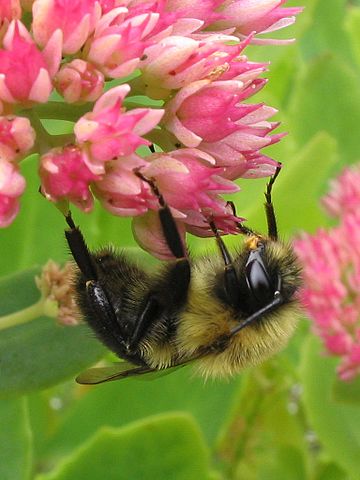
How do bumblebees deal with flowers that are blowing in the wind? Hamida Mirwan (University of Guelph) and colleague found that one species of bee showed no preference between mobile and immobile flowers but motion may be a factor in terms of foraging performance. Article link

Bombus impatiens

Bombus impatiens – By [1] [CC BY 2.0 (http://creativecommons.org/licenses/by/2.0)], via Wikimedia Commons

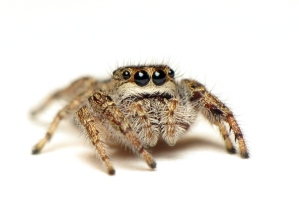
Raphaël Royauté and colleagues found that the personality of a jumping spider was affected by sublethal insecticide exposure. Royauté wrote to us,

Jumping spiders exposed to low doses of insecticide show changes in their personalities. Insecticides alter behaviours by jamming neural transmission. Most studies on insecticide toxicity compare how behaviours differ in average between insecticide-exposed and control groups, but they don’t take into account how insecticides affect variation in behaviour (aka personality). Bronze Jumping Spiders exposed to the insecticide had lower amount of personality differences in activity and prey capture behaviours and exposed spiders were in general more “unpredictable”. These effect also varied by sex. Activity differences were more strongly affected in males while prey capture capacities were more strongly altered in females. 

These results suggest that the effects of insecticides on personality differences may manifest before any effects on the population as a whole are detected, in which case scientists may be frequently underestimating the toxicity of insecticides. Spiders play an important role in agricultural fields as they help regulate pest outbreaks. These personality alterations may affect spiders’ capacity to provide this important ecosystem service.

A more detailed explanation of this research is available here » 

Eris militaris

A female jumping spider, Eris militaris (Araneae: Salticidae). Photo by Crystal Ernst; provided by Raphaël Royauté

Matt Yunik (University of Manitoba) and colleagues discovered that unfed American dog ticks have the ability to survive an additional winter. Prior to this research, it was thought that these unfed ticks searching in spring died before the next winter. Article link

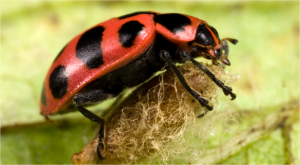
Fanny Maure (Université de Montréal) and others found and characterized a new RNA virus of Dinocampus coccinellae, a parasitoid of the ladybird beetle Coleomegilla maculata. The virus appears to be a symbiont of the parasitoid which is stored in the adult wasps’ oviducts and is transmitted by the parasitoid larva to its ladybird host. The virus then moves to the ladybird’s brain and replicates, inducing paralysis and twitching, around the same time that the parasitoid larva emerges and spins a cocoon between the legs of its host. The infected ladybird then acts as a twitchy bodyguard against predators while the parasitoid develops. Then, amazingly, when the adult parasitoid emerges from the cocoon, the viral infection in the ladybird’s brain clears and the host resumes normal behaviour! Article link

A ladybird "bodyguard" protecting its parasitoid from predators.  Photo provided by Jacques Brodeur.

A virally-manipulated ladybird « bodyguard » protecting its ‘puppet master’ from predators. Photo provided by Jacques Brodeur.

Former UdeM student Fanny Maure with her PhD work featured on the cover of National Geographic! Photo provided by Jacques Brodeur.

Former UdeM student Fanny Maure with her PhD work featured on the cover of National Geographic! Photo provided by Jacques Brodeur.

Megan McAuley (University of Guelph) and colleagues found that repeated conditioning with a floral scent is needed for long-term memory establishment in bumblebees. Article link

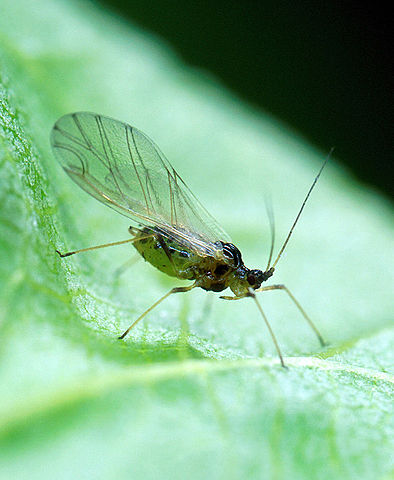
Murali-Mohan Ayyanath and colleagues show that sublethal doses of an insect growth regulator stimulate reproduction in the green peach aphid. Article link

Myzus persicae

Myzus persicae – By Scott Bauer [Public domain], via Wikimedia Commons

Do different pollen-packing behaviours by bees affect the functional value of pollen? PhD student Alison Parker and colleagues found that the pollen transported by non-corbiculate bees remains fully functional whereas the packing behaviour by corbiculate bee species can decrease the functionality of their pollen. This research suggests that non-corbiculate bees may be more valuable pollinators. Article link

A study by Lorraine Adderly and colleague finds that solitary bees are important for pollination in seablush plants in the Gulf Islands and on Vancouver Island. Article link 

Insect Management

Chaminda E. Amal de Silva helped provide evidence for there being high rates of blueberry spanworm parasitism in lowbush blueberry fields in eastern Canada. De Silva and colleagues suggest using augmentative or conservation biological control as a management technique against spanworm. Article link

For a forest moth, colouration is costly—especially under poor conditions (Article link). Coming soon, we will be featuring a post by Jessica Ethier (Concordia University), who took the lead on this long-term project.

After an outpouring of support from the Canadian entomological community, the Royal British Columbia Museum has decided to hire a new Curator of Entomology!

The competition for the Curator of Entomology position at the Royal BC Museum is now posted at http://royalbcmuseum.bc.ca/assets/Posting3.pdf. Deadline for applications has been extended to 24 March.

ESCQueJAM

The Entomological Society of Canada  and the Société d’entomologie du Québec are pleased to invite the entomological community to the 2015 Joint Annual Meeting in Montréal, Québec. The conference will take place from 8th to 11th November, and includes a range of symposia and associated events under the meeting’s theme : Entomology in the Anthropocene.

The plenary symposium is designed to provide a provocative overview of the challenges related to entomology in the Anthropocene. Plenary speakers include Dr. May Berenbaum (University of Illinois at Urbana-Champaign), Dr. Jessica Hellmann (University of Notre Dame), and Dr. Marcel Dicke (Wageningen University).

The Entomological Society of Canada and the Société d’Entomologie du Québec invite proposals for symposium sessions at the 2015 Joint Annual Meeting (JAM). We invite timely and well organised submissions from across the breadth of entomological science. We are particularly enthusiastic about symposia that are aligned with our 2015 meeting theme “Insects in the Anthropocene.” Deadline for symposium submission is the 28th February. See the webpage Call for symposia.

Sunday Nov. 8th, 7-10pm; Eat, drink and mingle with new and old friends at the ESC-ESS JAM Opening Reception at the Montréal Insectarium. Entomophagous appetizers will be served.

For more information, please visit our website, join us on Facebook and on Twitter using the hashtag #ESCJAM2015.

As a graduate student, publishing a paper is a big deal.  After spending countless hours doing the research, slogging through the writing process, soliciting comments from co-authors, formatting the paper to meet journal guidelines, and dealing with reviewer comments, it’s nice to finally get that acceptance letter and know that your work is getting out there.

We want to help publicize graduate student publications to the wider entomological community.  Every month or so, the ESC Student Affairs Committee will post a roundup of papers authored by Canadian graduate students.

We don’t anticipate that these lists will be comprehensive (alas, Google Scholar alerts aren’t perfect), but should give a nice ‘taste’ of student entomological research in Canada.  If you want your recently published article featured (or we missed yours last month!), send us an email at entsoccan.students@gmail.com

For regular updates on new Canadian entomological research, you can join the ESC Students Facebook page or follow us on Twitter @esc_students.

Without further delay, here’s what entomology grad students have been up to lately (articles published online between December 1, 2014 and January 18, 2015):

Behaviour and Physiology

Miruna Draguleasa (University of Toronto) and colleagues found that apparently bumblebees love caffeine just like many sleep-deprived grad students.

Two students, Carling Baxter and Rachael Barnett, and their colleagues at McMaster University found that male fruit flies become less choosy when selecting mates as they age.
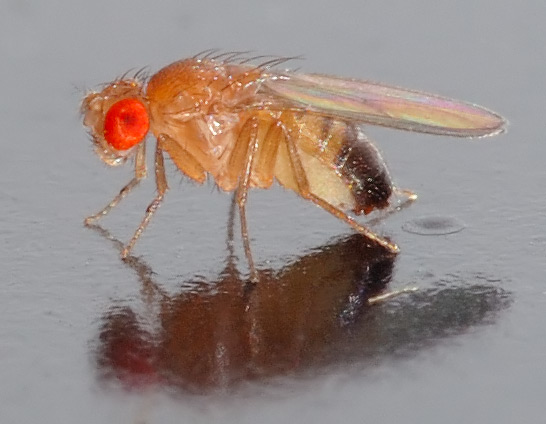
Drosophila_melanogaster_-_side

Older male fruit flies (Drosophila melanogaster) are less choosy. Photo by André Karwath aka Aka (Own work) [CC BY-SA 2.5 (http://creativecommons.org/licenses/by-sa/2.5)%5D, via Wikimedia Commons

Laura Sedra and colleagues at the University of Toronto Mississagua investigated how blood-feeding assassin bugs (Rhodnius prolixus) control their oviduct contractions

Laura Ferguson (University of Western Ontario) helped to determine that modifications of ion balance mediate cold tolerance in Drosophila.

The downside of being a sexy male tree cricket? You might not live very long. Kyla Ercit (University of Toronto Mississauga) and colleagues found that male Oecanthus nigricornis individuals with wide heads and small legs were most attractive, but individuals with narrow heads, large legs, and intermediate pronotum length were most likely to survive.

Rosemarie Vallières (Université Laval) and colleagues found that metabolism and winter survival of temperate hemlock looper populations in Québec will be more affected by fall heat waves (compared to boreal populations), which are increasing in frequency due to climate change.

Hemlock Looper, Bon Echo

Hemlock looper adult. Photo by D. Gordon E. Robertson (Own work) [CC BY-SA 3.0 (http://creativecommons.org/licenses/by-sa/3.0) or GFDL (http://www.gnu.org/copyleft/fdl.html)%5D, via Wikimedia Commons

Meet Zandawala and Zina Hamoudi (University of Toronto Mississauga) confirmed the identification of the adipokinetic hormone receptor in Rhodnius prolixus. The hormone is known to mobilize lipids, carbohydrates and proline for energy consuming activities.

New research by Fanny Maure (Université de Montréal) found that ladybirds can survive (and even reproduce!!) after parasitism and behavioural manipulation by a wasp. Featured on the cover of the November 2014 issue of National Geographic Magazine, and discussed in a fantastic accompanying article by Carl Zimmer.

Does the Earth’s magnetic field serve as a reference for alignment of the honeybee waggle dance? Short answer: At least local (ambient) geomagnetic field does not act as the reference for the alignment of waggle-dancing bees. Read more on the research conducted by Veronica Lambient and colleagues at Simon Fraser University here.

Ecology

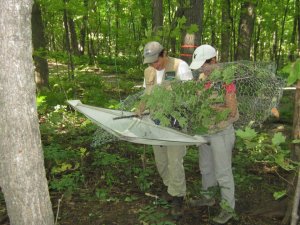
A recent study by Dorothy Maguire (McGill) and colleagues in a Quebec forest ecosystem finds strong top-down effects of predators on arthropods, but weak effects of fragmentation on predation and herbivory levels.
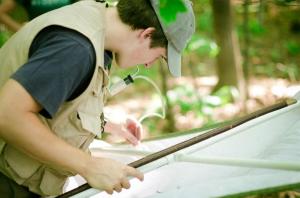
McGill2

McGill1

Students from McGill's Buddle Lab collecting insects using a beat sheet, sampling bird exclosures, and measuring damage on leaves. Photos courtesy of Dorothy Macguire.

Students from McGill’s Buddle Lab collecting insects using a beat sheet, sampling bird exclosures, and measuring damage on leaves. Photos courtesy of Dorothy Macguire.

Guillaume Sainte-Marie (Université du Québec à Montréal) and colleagues found that promoting hardwoods does not appear to reduce spruce defoliation during outbreaks of spruce budworm.

Crisia Tabacaru (University of Alberta) and colleagues determined that competitors and natural enemies may help prevent establishment of mountain pine beetle after fires.

Gun Koleoglu and Tatiana Petukhova (University of Guelph) found that Africanized honey bees may have higher viral resistance than European honey bees following parasitism by Varroa mites.

Researchers at the University of Alberta, including Devin Goodsman, found that the interactions between a lepidopteran defoliator and a bark beetle shifted from facilitative to competitive depending on outbreak severity.

Sean McCann and Catherine Scott (Simon Fraser University) discovered that the red-throated caracara rivals the predatory impact of army ants on some populations of Neotropical social wasps.

Genetics

A new molecular marker for phylogeographic and population studies of the black-legged tick has been identified by Chantal Krakowetz (University of Saskatchewan) and colleagues. And in a follow-up study, the mitochondrial gene variation could point to origins of tick populations in the United States and the potential risk for Canada.
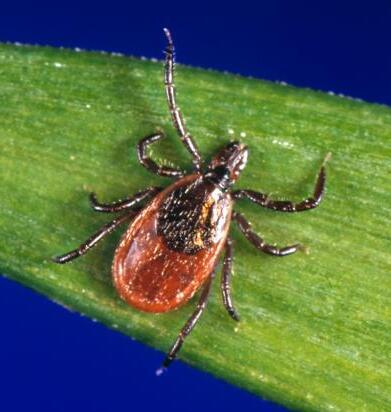
A deer tick, Ixodes scapularis. Photo Credit : Jim Gathany [Public domain], via Wikimedia Commons

At York University Daria Molodtsova and Brock Harpur, together with colleagues, linked genetic mutations in a transcriptional network to the evolution of complex behaviours in honey bees.

Pest Management and Biological control

Two studies conducted at the Université de Montréal by Julie Faucher-Deslile and colleagues found protein content is not the only factor important in selecting diet supplements for predatory mites and that supplementing predatory mite applications with apple pollen may increase the control of thrips in greenhouses.

Insects used in modern weed biological control programs are highly host-specific to their target weed, but can sometimes exhibit ‘spillover’ herbivory on related nontarget plants. Determining where and why spillover occurs can help us predict its potential to negatively affect native plant populations. Here, Haley Catton (UBC Okanagan) and colleagues used two field experiments to show that a controversial biocontrol weevil exhibits spillover when at high density, but does not find or feed on nontarget plants even a few metres from release points. This is good news, as the more localized the spillover, the lower the chance of negative population-level impacts to nontarget plants.
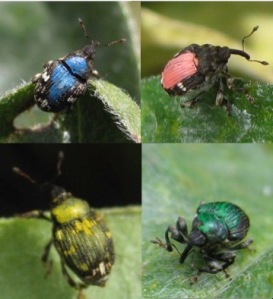
<i>Mogulones crucifer </i>biocontrol weevils painted for a mark-release-recapture experiment involving target and nontarget host finding.

Mogulones crucifer biocontrol weevils painted for a mark-release-recapture experiment involving target and nontarget host finding. Image by Haley Catton.

Christine Miluch (University of Alberta) and colleagues looked at how to maximize the attractiveness of pheromone traps to diamondback moth males in canola.

An interesting study conducted by Simon P. W. Zappia and Amber Gigi Hoi found that regardless of how energy-deprived they are, DEET will keep mosquitos off your stinky socks!

A Canadian research team from Simon Fraser University, including graduate students Michel Holmes and Jason Draper, has identified the bed bug aggregation pheromone! The discovery was featured at several media outlets, including « Wired ».
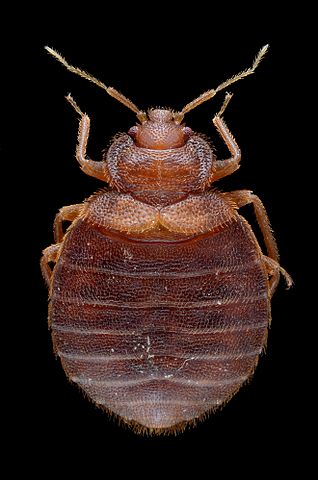
Female bed bug

A female bed bug. By Gilles San Martin from Namur, Belgium (Cimex lectularius (bed bug)) [CC BY-SA 2.0 (http://creativecommons.org/licenses/by-sa/2.0)], via Wikimedia Commons

Until next time!

The ESC Student Affairs Committee

By Sabrina Rochefort, MSc student, McGill University.

Early in my undergraduate program at McGill University, I was looking for an opportunity to volunteer in a lab, where I could feed my need to learn and make new discoveries. That led me to Terry Wheeler’s lab; he was the teacher for my evolution class at that time.

I had a strong interest in evolution and paleontology, and was hoping to pursue that field. But Terry informed me that volunteering in his lab did not involve studying fossils, but instead studying tiny insects. Curious and willing to learn about insects, I decided to give it a try! At the Lyman Museum, I quickly discovered that entomology is a field of study with great opportunities and with an infinite number of projects. Besides studying for my degree, and working on weekends at Tim Hortons, I was volunteering up to 12 hours a week, between and after classes, pinning flies and identifying them. I couldn’t lie to myself anymore, I had developed a strong passion for entomology!

??????????

Identifying flies at the Lyman Museum. Photo by E. Vajda


Volunteering gradually transformed into a student job. It’s then that Terry introduced me to the fly family Piophilidae, commonly known as the Skipper Flies. I spent numerous hours familiarising myself with piophilids, reading literature, learning to identify them, their ecology, etc. All that knowledge that I acquired in entomology during my undergraduate studies gave me a great opportunity: the chance to pursue graduate studies. I am presently undertaking a Master’s project on the taxonomy and phylogeny of Piophilidae.

Image 2

Collecting piophilids on decaying mushrooms in the Yukon. Photo by E. Vajda


Now, let’s put a little less attention on my background and a little more on this wonderful family of flies and my project!

Piophilids are small to medium flies (3 to 9mm), which are abundant and diverse, especially in the northern hemisphere. To date, there are 82 described species worldwide. They mainly feed and reproduce on decaying organic matter. This family is of interest in several scientific domains such as forensic entomology (for their presence on carrion), in behavior (for their unique sexual selection strategies) and in biodiversity (for their interesting geographic distribution in the arctic). Several species are also pests in the food industry. The study of their taxonomy and phylogeny is essential for several reasons: to be able to identify specimens found in studies; to document the geographic distribution of species; to establish their phylogenetic relationships; and to learn more about their biology and ecology. The main objectives of my thesis are a taxonomic revision of the Nearctic Piophilidae and phylogenetic analysis of the genera worldwide.

Liopiophila varipes, a piophilid species commonly found on carrion. Photo by S. Rochefort

Liopiophila varipes, a piophilid species commonly found on carrion. Photo by S. Rochefort

A statement that is often repeated in our lab is that it is important for taxonomists and ecologists to collaborate, and that the outcomes of our taxonomic projects should be useful not only for taxonomists but also to other entomologists in other fields of expertise. And that is right! For taxonomy to make sense, it is essential that other researchers be able to understand it and use our work. This can be done by providing them with “working tools” such as identification keys which are simple and adapted to a specific need. It is for that reason that, as a side project to my thesis, I decided to collaborate with Marjolaine Giroux, from the Montreal Insectarium, Jade Savage from Bishop’s University and my supervisor Terry Wheeler on a publication and key to the Piophilidae species that may be found in forensic entomology studies in North America. That paper has just been published in the Canadian Journal of Arthropod identification. We reviewed some of the problems associated with identification of piophilids, and the need to develop a user-friendly key to the species. We wanted to create a key with lots of photographs, that was user-friendly and simple for non-specialists, and that would be published on-line and open access. Because of this, CJAI was the ideal journal for our paper.

Seeing this publication completed early in my graduate studies is a great accomplishment for me. It gave me the opportunity to share my knowledge and make taxonomy more accessible to students, amateur entomologists and researchers in the academic and scientific community. Undertaking a project in a less familiar field which is linked to your expertise is a very gratifying experience which I strongly encourage other students to try. From this experience, I acquired new skills and knowledge, I made connections with researchers in other fields of study and I was able to make more connections between my Master’s thesis and other subjects in entomology.

Reference

Rochefort, S., Giroux, M., Savage, J., Wheeler, T.A. 2015. Key to Forensically Important Piophilidae (Diptera) in the Nearctic Region. Canadian Journal of Arthropod Identification No. 27: January 22, 2015. Available online

Call for an ESC symposium at the International Congress of Entomology in Orlando 2016

The ESC Ad Hoc Committee for the International Congress of Entomology, chaired by Murray Isman, is inviting proposals for a Canadian-focussed symposium at ICE. This should be a showcase for an area of entomology in which Canada has a special strength but which would also be of interest to an international audience. Symposium submissions should fit into one of the section topics for ICE, and are due by March 2 2015. Details of the information needed to submit a Symposium proposal can be found at http://ice2016orlando.org/preview-symposium/. Anyone wishing to submit a proposal should contact the Secretary, Alec McClay at secretary@esc-sec.ca, as soon as possible, with details of their proposed topic area and potential speakers. The Executive will review proposals and select one to be developed for submission. Some financial support may be available from ESC for the selected symposium. You can also advise us if you have already submitted a symposium proposal and wish to have it considered as the ESC symposium.

Appel à soumission pour un symposium de la SEC au Congrès international d’entomologie (ICE) 2016 à Orlando

Le comité Ad Hoc de la SEC pour l’ICE, présidé par Murray Isman, invite les soumissions pour un symposium d’intérêt canadien à l’ICE. Il s’agira d’une vitrine pour un domaine de l’entomologie dans lequel le Canada est spécialement fort, mais qui pourrait être d’intérêt pour une audience internationale. Les soumissions de symposium devraient pouvoir être liées à un des thèmes de l’ICE, et sont attendues pour le 2 mars 2015. Les détails sur l’information requise pour soumettre une proposition de symposium se trouvent sur http://ice2016orlando.org/preview-symposium/. Toute personne désirant soumettre une proposition doit contacter le secrétaire, Alec McClay, à secretary@esc-sec.ca, le plus tôt possible, avec les détails du sujet proposé et les conférenciers potentiels. Le conseil exécutif va réviser les propositions et en sélectionner une qui sera développée pour être soumise. Un soutien financier pourrait être disponible de la SEC pour le symposium choisi. Vous pouvez également nous aviser si vous avez déjà soumis une proposition de symposium et que vous voudriez qu’elle soit considérée pour le symposium de la SEC.

Alec McClay, Ph.D.
Secretary, Entomological Society of Canada

10048651725_c3dd122fd0_b

Only half of an estimated 35, 000 insects in BC have been recorded. A curator is urgently needed to address research priorities for BC’s most diverse group of organisms. Photo by Miles Zhang.


The following is a guest post by Professor Felix Sperling 

I’m always amazed when I see a well-established natural history museum that doesn’t have entomology curators. What are their administrators thinking? Insects form half of the known species diversity of our planet, a fundamental fact that too many people are unaware of. The ecological and even economic impact of all those species is overwhelming across all terrestrial and freshwater ecosystems, which are of course the habitats that we occupy ourselves. And there is still a shocking amount of insect biodiversity left undocumented or misunderstood, lying in wait to bite us, literally and figuratively, just when we are unprepared to deal with it.

6460412947_ba61243c48_b

Over 16, 000 RBCM Entomology specimens have been loaned out in the past 5 years alone. Photo: S. McCann.


But that is just the surface. The study of insects is an indispensable portal to understanding life on our planet and therefore to knowing ourselves and our place in this world. An appreciation of the exuberant diversity of insects is an essential foundation from which to build a fully connected and integrated appreciation of our surroundings, and to understanding the diversity and vitality of our interactions. That connectedness is what modern museums strive to capture and present. An entomology curator is the nexus for such connections, serving to do so very much more than just assembling specimens. An entomology curator is responsible for half of all known biological diversity, which also means curation of half of our knowledge about diversity, a human construct that is vulnerable to extinction just like a language is. And more than a purely cultural construct, such a curator maintains the chain that ties the dynamic memory of a human community to the material reality that allows the people of our planet to thrive. So how can a serious museum do without one, especially in a region where biodiversity is important to the self image of a people and insect biodiversity professionals are already so few in number?


So I was seriously puzzled to hear that the CEO of the Royal British Columbia Museum, Professor Jack Lohman, is seriously considering redirecting their entomology curator salary line, which was vacated when Dr. Rob Cannings retired in 2012. But I hear that there is still time for us all to have some input into the process, since Lohman has agreed to discuss the issue one last time on January 22nd, and has asked for a demonstration of support for such a position from outside the museum by that date.

1016207_10100677638569879_1925501145_n

Curatorial oversight leads to enhanced public engagement, fulfilling the core mission of a public museum. Photo by Miles Zhang.


I hope that as many of you as possible can write a short letter to Professor Lohman to point out the importance of entomology in the context of the Royal British Columbia Museum and the broader community that it is part of. Letters from a diversity of backgrounds and institutions would be most helpful. Some of you will have already heard about this via emails that circulated just before the holiday break, and here is an information sheet that may help you to make the case. You can get a better sense of Professor Lohman’s vision and background here.

Letters on institutional letterhead would be best, and can be sent to:

Prof. Jack Lohman,  Chief Executive Officer

Royal British Columbia Museum

675 Belleville St,

Victoria, BC V8W 9W2

JLohman@royalbcmuseum.bc.ca


And send a copy to:

Peter Ord: Vice President, Archives, Collections, and Knowledge

POrd@royalbcmuseum.bc.ca


My deepest appreciation to all of you who have read this far, and especially to any of you who can send off a letter, however brief. May you all have a happy, healthy and prosperous year in 2015!

IMG_6906

The Royal BC Museum houses over 600,000 entomological specimens. Photo: S. McCann.