


Nouvelles
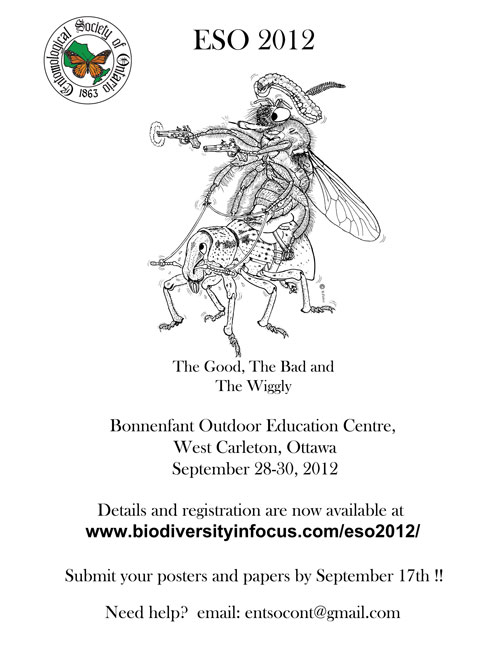
Greetings fellow entomologists,
The 149th annual meeting of the Entomological Society of Ontario is fast approaching!
The venue: Bonnenfant Outdoor Education Centre, West Carleton, Ottawa, Canada.
The dates: September 28-30th, 2012.
Registration is now open at the official meeting website.
Submit your Posters and Oral Presentations before September 17th to be assured of getting onto the program.
Students: enter the President’s Prize competition and win cash!
Don’t be disappointed – register early as we are limited to 100 participants.
See you in September!
Bruce Gill
ESO President
Chair ESO 2012
By Chris Buddle, Editor-in-Chief, The Canadian Entomologist
———————–
As Editor-in-Chief for The Canadian Entomologist, I have the privilege of knowing what papers will be appearing in our journal in the future… in this post, without saying too much, I wanted to give you a ‘sneak peek’ of what to expect in the future.
Living in metal-contaminated lakewater is just another day’s work for phantom midge larvae.
In the lakes surrounding Sudbury, Ontario and Rouyn-Noranda, Quebec, over 75 years of smelter operations have left their mark by contaminating soil and water with the trace metals cadmium, nickel, copper, and zinc.
This contamination led Maikel Rosabal, Landis Hare, and Peter Campbell, all from the Institut national de la Recherche scientifique in Québec, to study how aquatic animals tolerate these contaminants. To do so, they needed a study organism that was abundant, easy to collect, and could accumulate and tolerate trace metals. The best option turned out to be larvae of the phantom midge Chaoborus.
“The lakes in the area, and their watersheds, have been contaminated by the deposition of atmospheric aerosols and particles. Metal concentrations in lake water tend to be higher in the lakes that are downwind from and close to the smelters, than in lakes that are upwind and distant from the smelter stacks,” says Dr. Peter Campbell. “The presence of Chaoborus in lakes with high metal concentrations implies that they are highly metal tolerant.”
The researchers chose a total of 12 lakes around Sudbury and Rouyn-Noranda with differing concentrations of trace metals, and collected water samples, using diffusion samplers that excluded particles, and midge larvae using a plankton net. After homogenizing the larvae, the researchers used a series of centrifugation, heating, and sodium hydroxide digestion steps to separate the subcellular components of the larvae. They then measured the amount of metal in each fraction as well as the concentrations of dissolved metals in samples of lake water. This allowed them to relate the concentrations of each trace metal in lake water to the concentrations in larvae.
They found that the majority of each metal accumulated in the cytosolic heat-stable protein fraction that they isolated from the larvae—a fraction that contains large amounts of metal-binding proteins. And while other fractions also contained small amounts of metals, it was in the heat-stable protein fraction that metal concentrations responded most obviously to the increasing metal concentrations in lake water. This suggests that the Chaoborus larvae were able to bind and detoxify increasingly large amounts of these potentially toxic metals.
“This suggests an important role for these metallothionein-like proteins in the detoxification of metals,” says Dr. Campbell. “Presumably this contributes to the presence of this insect in highly metal-contaminated lakes.”
While laboratory studies usually focus on the effects of exposure to a single trace metal (usually dissolved in the water), animals in this study were exposed in the field to many trace metals both in the water and in their planktonic food. The researchers suggest that Chaoborus larvae would be effective “sentinels” for estimating trace-metal exposure to lake plankton, which is a key component of ecological risk assessments.
“Rough estimates of trace metal exposure are often obtained by measuring total metal concentrations in the water or the sediment. Such values usually overestimate metal exposure because much of the metal present is not available for uptake by organisms because they are bound to substances such as organic matter or iron oxides,” explain the researchers. “For these reasons, measurements of trace metals in organisms are increasingly used to estimate exposure in risk assessments.”
Rosabal, M., Hare, L. & Campbell, P.G.C. (2012). Subcellular metal partitioning in larvae of the insect Chaoborus collected along an environmental metal exposure gradient (Cd, Cu, Ni and Zn), Aquatic Toxicology, 120-121 78. DOI: 10.1016/j.aquatox.2012.05.001
Pubmed: http://www.ncbi.nlm.nih.gov/pubmed/22647479

Photo: Maikel Rosabal
Jeffrey Higgins has enjoyed the same 2 mile stretch of the Thames River in London, Ontario for ~50 years. He traded his fishing rod for a camera about 5 years ago to celebrates the natural world, and enjoys sharing his photos on his website and on Facebook. Jeffrey submitted the following photos and asked for suggestions about the species ID. If you have a suggestion, please let Jeffrey know in the comments.
———————————

Photo by Jeffrey Higgins (Click to enlarge)

Photo by Jeffrey Higgins (Click to enlarge)

Photo by Jeffrey Higgins (Click to enlarge)

Photo by Jeffrey Higgins (Click to enlarge)
Dear Buggy is the the alter-ego of Dr. Chris MacQuarrie, a research entomologist with the Canadian Forest Service. You can ask Buggy questions of your own on Twitter @CMacQuar.
—————————-
Hello all,
Writing your first manuscript can be difficult. I remember spending a ridiculous amount of time preparing the first draft of my first paper. I thought I had produced something pretty good. So imagine my surprise when the file came back from my supervisor dripping in red ink (digital red ink, that is).
I had two big problems. First, like many new students, I didn’t make a particularly convincing argument in my introduction, my methods were confusing, the results were a mess and the discussion was meandering. My second problem confounded the first. I wasn’t a good writer.
Solving the first problem was easy. I had two very patient supervisors who taught me how to write a scientific paper. Solving the second problem is taking a little longer, because the only way to become a better writer is to practice. That is, you need to write. I write as much as I can, but I still have a lot of work to do. I’m lucky that I’ve had the good fortune to work with good writers and good editors from whom I’ve managed to learn some good habits (and break some bad ones).
The rest of my education has come from books. I thought I’d share some of these with you.
Books about writing in science:
 How to write and publish a scientific paper 6th ed. by RA Day and B. Gastel
This is an excellent primer on how to write a scientific paper and should be on the bookshelf of every grad student.The 6th edition is a bit pricey, but you might be able to pick up a copy of the 4th or 5th edition at a good used bookstore. I own the 4th edition, it’s a bit dated but more than adequate for everyday use.
 Writing Papers in the Biological Sciences 5th ed. by V McMillan
I was introduced to this book during my undergrad where it was on the required reading list (in part, I think because the author is also an alumni of the University of Saskatchewan’s biology department) I’ve carried it with me ever since. McMillan focuses on writing term papers and lab reports with less attention paid to writing journal articles, so this might be a better choice for undergrads. That said, there are good sections on formatting and citing that also apply to graduate level work. The current edition also covers the formatting of posters.
Writing to Learn Biology by R Moore
 A Short Guide to Writing about Biology 7th ed. by J Pechenik
These two were recommended to me by Cedric Gillot, editor of the Bulletin (Cedric is one of those good editors I mentioned earlier. He’s been editing my work, on and off, for over 15 years).
Moore’s book looks to be out of print but many copies are available from online used book stores (as are most of the books in this post). Pechenik’s book is well reviewed on Amazon. I’ll track down a copy and report back. If you’ve read this book let me know what you thought.
Books on writing in general:
These three books are not about writing in science, but are all excellent guides on how to write well.
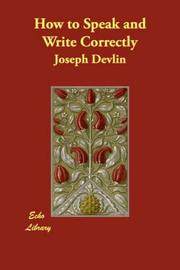 How to Speak and Write Correctly by J Devlin.
Perhaps the granddaddy of all grammar guides. While it’s a bit dated (Devlin goes into detail on the proper use of ‘shall’ and ‘thou’), writers should still find it relevant. In particular, those, like me, that were never taught the rules of english grammarl. One other plus, since it was published in 1910, the copyright has expired and it can be had for free!
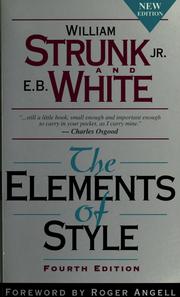 The Elements of Style 4th ed. by W Stunk and E.B. White.
The classic guide to writing in english. Buy this. Read it. Then put it on your bookshelf and read it again every year for the rest of your life. The best $12 you can invest towards becoming a better writer.
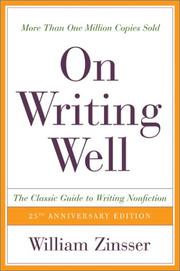 On writing well by W Zinsser
Zinsser focuses on guiding the writer to telling a compelling story. A great resource if you fancy becoming a writer about science (in addition to a writer of science). Regardless, science is about telling stories and the advice in this book about constructing a narrative can be applied to writing in the peer-reviewed literature.
And two for the road…
These last two books are on the art and craft of writing. Both are fun reads and worth checking out.
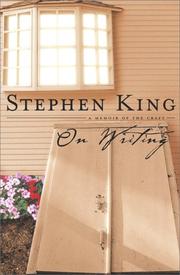 On Writing by S King.
Yes, that ‘S King’. King has much good advice to offer to all writers. If you ever wondered how King could be such a prolific writer, consider this: he writes at least 1000 words a day, six days a week. Anyone who has spent that much of their life writing should have good advice to offer. Set any doubts that you may have about King as a fiction writer and read this book. Probably one of his best.
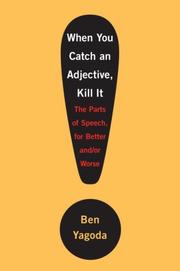
When you catch an adjective. Kill it. by B. Yagoda
cover photo [ http://covers.openlibrary.org/w/id/528568-M.jpg ]
A fun little book about exercising verbosity from your writing. Clearly, I need to read it again.
I’d also love to hear your recommendations. What books influenced you as a writer?
Cover images in this post are from the Open Library project. Links are to Amazon.ca, but you should be able to find many of these in your local used bookstore, university bookstore or library.
CONTACTER LA SOCIÉTÉ
Assistant administratif : info@esc-sec.ca
SEC Président : ESCPresident@esc-sec.ca
This post is also available in: