


Nouvelles

Cobblestone Tiger Beetle. Photo by Stephen Krotzer, used with permission.
by Mischa Giasson
In 2008, l was asked to participate in a mark-release-recapture survey on the shores of Grand Lake, New Brunswick. My dad and I joined Fredericton entomologist Reggie Webster on a boat to visit three small sites among the rocky beaches surrounding the lake. We were searching for a rare, recently locally discovered beetle that is found nowhere else in Canada: the Cobblestone Tiger Beetle. This experience was the first of many that lead me to the realisation that a career in entomology was an option, fueled by my life-long fascination with insects (and other creepy-crawlies).
The Cobblestone Tiger beetle (Cicindela marginipennis) is an insect in the sub-family Cicindellidae (Coleoptera: Carabidae). This small, pretty beetle is listed as Endangered and placed in Schedule 1 of the Species at Risk Act (SARA), which means that the species has been deemed at risk and that there has been development and implementation of protective and recovery measures.
There is no doubt that Tiger Beetles live up to their namesake as extremely beautiful, but equally deadly predators. These beetles run down their prey by sprinting in short, quick bursts. In fact, they run at such high speeds that they temporarily go blind! One species has been recorded moving at 9 km/hr, which is almost 54 times its body length per second. Their antennae are used to prevent any collisions while sprinting and they have a very short reaction time, but they must make frequent stops to take in their surroundings and make sure they’re on the right track.
Both the adults and larvae are predators, the larvae employing a sit-and-wait approach: they wait in ambush from small vertical burrows in the ground, striking out at lightning speed to catch any prey that passes nearby. Prey consists of other insects as well as spiders, which stand no chance against the huge mandibles of the Tiger Beetle. The Cobblestone Tiger Beetle can be distinguished from other Tiger Beetles by the smooth, continuous cream-coloured border along the outer edges of the elytra and by a bright orange/red abdomen that is visible when the beetle is in flight. Their overall colour is most often a dark chocolatey brown, but some metallic blue and green individuals have been observed in the New Brunswick populations.

Cobblestone Tiger Beetle. Photo by Stephen Krotzer, used with permission.
The Cobblestone Tiger Beetle gets its name from its choice in habitat. The eight sites in New Brunswick where it can be found are all cobblestone beaches. This beetle is also found along major river systems in the United States, from Mississippi to Alabama and from Indiana through to New England. Populations are quite small, few and far between. The Canadian population was discovered in 2003 by Dwayne Sabine and is the only known population to also inhabit lakeshore sites, likely due to the riverine characteristics of Grand Lake. There are three known sites on Grand Lake, while the other five are on the shores of small islands in the Saint John River between Woodstock and Bath. These cobblestone habitats are unique to areas with yearly spring flooding which keeps the vegetation from spreading along the beach, maintaining the flat areas of gravel and sand between the stones which are necessary for the larvae to make their burrows. Not much is known of the Cobblestone Tiger Beetle’s specific life history, but it is assumed to be similar to that of other tiger beetle species. The beetles have a two-year life cycle: eggs are laid individually in the sand, where the larvae will hatch and make burrows. The larvae overwinter in their burrows, somehow surviving the spring floods and emerging as adults in June.

Cobblestone Tiger Beetle. Photo by Stephen Krotzer, used with permission.
Due to their specific habitat requirements, Cobblestone Tiger Beetles are very vulnerable to environmental changes and disturbances. The biggest threat is habitat damage. In New Brunswick, the installation of the Mactaquac dam destroyed many suitable habitats both upstream and downstream. The small beetle populations are also quite vulnerable to over-collection by scientists and insect enthusiasts. The current concerns involve the use of off-road vehicles, as this leads to the alteration of suitable habitat and often directly leads to the death of many larvae present on the beaches. This threat applies mostly to the shores of Grand Lake, where there is increasing development and use of the beaches. The protective measures implemented include developing a stewardship plan, educating the local communities and encouraging their support and participation in the conservation of this special beetle. Decreasing human disturbance is the most important factor in ensuring the survival in our province of the already very small populations of the Cobblestone Tiger Beetle.
References
https://www.registrelep-sararegistry.gc.ca/virtual_sara/files/plans/rs_cobblestone_tiger_beetle_e_final.pdf
http://www.sararegistry.gc.ca/species/speciesDetails_e.cfm?sid=1031
Zurek, D. B., & Gilbert, C. (2014). Static antennae act as locomotory guides that compensate for visual motion blur in a diurnal, keen-eyed predator. Proceedings of the Royal Society of London B: Biological Sciences. 281(1779): 20133072.

B. bohemicus male Image: Magne Flåten via wikimedia.org CC BY-SA 3.0 (B. bohemicus female here)
By Zach DeLong
When people hear of endangered species they often think of large and impressive creatures like the Siberian Tiger or Panda Bear, but we often forget about the smaller, yet no less impressive species that need our help as well. The charmingly named Cuckoo Gypsy Bumblebee, or as scientists all it Bombus bohemicus, is a member of the family Apidae, in the order Hymenoptera. Though the Species at Risk Act (SARA) currently has no status for the Cuckoo Gypsy Bumblebee, it has been recognized and listed as endangered by the Committee on the Status of Endangered Wildlife in Canada (COSEWIC). The term “endangered” is a hot topic, but there may be confusion about what it truly means. As defined by COSEWIC, an endangered species is “a wildlife species facing imminent extirpation or extinction[1]”. In the case of the Cuckoo Gypsy Bumblebee, this means the species is at risk of disappearing from the Canadian wilderness.
The Cuckoo Gypsy Bumblebee is an inquiline parasite of other types of bees, which means the Cuckoo Gypsy Bumblebee is a home invader. Normally such an invader would be attacked by the workers within the hive, but the Cuckoo Gypsy Bumblebee produces a variety of chemicals which both disguise it as a member of the host species[2] and inhibit worker aggression towards the invader[3]. The Cuckoo Gypsy Bumblebee is a generalist parasite and is surprisingly able to successfully invade a number of different Canadian species, namely the Rusty-patched Bumblebee, the Yellow-banded Bumblebee, and the Western Bumblebee[4]. Once inside the nest the Cuckoo Gypsy Bumblebee engages in a number of dominance behaviours to usurp the host queen, including ejecting host larvae from cells, eating host eggs and even outright attacking the host queen[5]. Coexistence with the host queen is preferable as her suppressor pheromones help control the workers who might otherwise attempt to become reproductively active themselves, so the invading Cuckoo Gypsy queen will often choose to shove or perform faux-stinging behaviour over outright killing her co-matriarch[5]. The Cuckoo Gypsy queen produces no workers of her own. This means she relies on host workers to defend the nest, rear her young, and forage for food[2]. Instead, all her offspring are reproductive with a 1:1 female to male ratio[6]. Young Gypsy Cuckoo Bumblebees can be seen flying about and feeding on flowers while they wait for their reproductive organs to mature so they can begin looking for a mate and a suitable host nest to invade.

Distribution of Cuckoo Gypsy Bumble Bee throughout North America. Image: COSEWIC
The Cuckoo Gypsy Bumblebee is widely distributed across a wide range in Canada, with individuals found in all provinces and territories except Nunavut[4], though populations are mostly concentrated in southern portions of Ontario and Quebec, and the Maritime provinces. Its decline across Canada has been attributed to a number of factors. It has been shown that a certain host density must be maintained for cuckoo bee parasites to be able to persist in a given area, and the general decline of bees throughout Canada has subsequently damaged Cuckoo Gypsy Bumblebee populations[4]. The mass spraying of crops with pesticides, particularly neonicotinoids, and the release of pathogen-carrying exotic bee species have impacted both cuckoo bees and host densities across Canada[4]. If we want the Cuckoo Gypsy Bumblebee to recover, perhaps the best way is to make Canada a more bee friendly environment as a whole. If we address issues resulting in the decline of other bee species, we can provide the population density necessary to facilitate persistent cuckoo populations. Additionally, addressing factors such as pesticide usage and the introduction of foreign pathogens would have positive effect on Cuckoo Gypsy Bumblebees as this would not only increase the population density of hosts, but also improve survival rates of Cuckoo Gypsy Bumblebees themselves.
References
[1]Assessment Process, Categories and Guidelines. COSEWIC. 2005-06-15. 2015-07-08. http://www.cosewic.gc.ca/eng/sct0/assessment_process_e.cfm#tbl5
[2]Kirsten Kreuter, Elfi Bunk, Anna Lückemeyer, Robert Twele, Wittko Francke, Manfred Ayasse(2012). How the social parasitic bumblebee Bombus bohemicus sneaks into power of reproduction. Behavioral Ecology and sociobiology, Vol 66, Issue 3, pp 475-486.
[3]Stephen J. Martin, Jonathan M. Carruthers, Paul H. Williams, Falko P. Drijfhout(2010). Host Specific Social Parasites (Psithyrus) Indicate Chemical Recognition System in Bumblebees. Journal of Chemical Ecology, Vol 36, Issue 8, pp 855-863.
[4]COSEWIC Wildlife Species Search: Bumble Bee, Gypsy Cuckoo | Bombus bohemicus. COSEWIC. 2002-10-21. 2011-11-07. http://www.cosewic.gc.ca/eng/sct1/searchdetail_e.cfm?id=1232&StartRow=191&boxStatus=All&boxTaxonomic=All&location=1&change=All&board=All&commonName=&scienceName=&returnFlag=0&Page=20
[5]R. M. Fisher(1988). Observations on the behaviours of three European cuckoo bumble bee species (Psithyrus). Insectes Sociaux, Volume 35, Issue 4, pp 341-354.
[6]Vergara, Carlos H. (2003). Suppression of ovarian development of Bombus terrestris workers by B. terrestris queens, Psithyrus vestalis and Psithyrus bohemicus females. Apidologie 34, pp 563–568
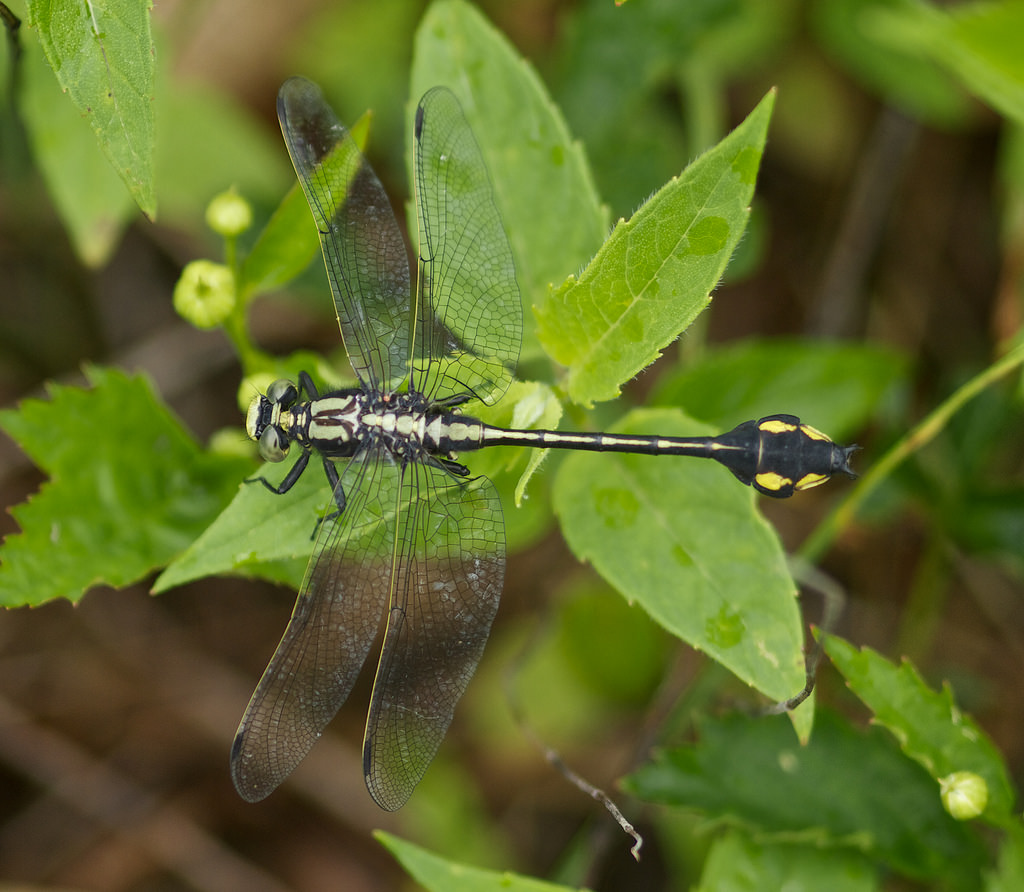
Fig. 1. Skillet Clubtail dragonfly adult; notice the distinctive “skillet” on tail. Photo Credit: David Marvin. Used under a Creative Commons BY-NC-ND 2.0 licence.
By Melody McLean
What if I told you that as a New Brunswicker, there are animals in danger of going extinct in your own backyard? Saying that, you’re probably thinking of a cute, fuzzy, little animal with big, sad eyes being displaced from its home. Well, that’s not what I’m referring to. I’m talking about the Skillet Clubtail Dragonfly (Gomphus ventricosus), belonging to the insect order Odonata. This dragonfly currently has no status under the Species at Risk Act (SARA), but was the only arthropod classified in the 2010 COSEWIC (Committee On the Status of Endangered Wildlife In Canada) report as being endangered. Simply put, if we don’t do something, they could become extirpated[i] from Canada or even extinct. When we hear about insects in our province, we often associate them with being pests, like spruce budworm, aphids, or disease spreading agents like mosquitos. But what we don’t often realize is that not all animals at risk of extinction are cute and fluffy. I’m here to shed some light on an underdog of the animal world, who could use a little help from us.
Insects-we can’t live with them; we can’t live without them.
What you may not know is just how thankful we (myself included) should be for insects. They clean up after us, help to provide us with rich soil for our gardens, indirectly provide us with fresh food thanks to their pollination efforts; some, like dragonflies, even keep other insects from bugging us¾like our own personal pest control.
The Skillet Clubtail dragonfly is strikingly beautiful, with green, yellow, black and brown markings running along its thorax and abdomen; transparent wings; big dark green eyes; and a distinctive circular flare, resembling a skillet, at the tip of its tail (Fig. 1).
The Biology behind the Insect
The Skillet Clubtail’s life cycle and biology is very similar to that of other dragonflies. The female lays her eggs by dipping her abdomen into the water to release them. Growing and developing, the shallowly burrowed nymphs take at least 2 years (possibly more) to develop before emerging. If conditions are right, usually in the latter 2 weeks of June, the dragonfly nymphs will find a “settle point” where the water is calm; they’ll climb up onto nearby vegetation to emerge synchronously[ii] as adults. Although the nymphs spend the majority of their lives in the water, the adults spend most of their lives around brush, fields, bogs and in the nearby canopy to forage for other insects.
Home of the Skillet Clubtail
This stunning dragonfly is restricted to North America. In Canada, it is currently found only in a few select places along the Saint John River, specifically in the Fredericton region of New Brunswick. Over 60 years ago, the Skillet Clubtail could be found in a few other locations in Canada, including Ontario, Nova Scotia and Quebec. But since there have been no recent sightings there, New Brunswick may be the last known Canadian location. The United States is running into similar problems with this insect too. It was once found in Pennsylvania and New York but is likely extirpated from both of those areas. The U.S. range extends along the Red River Basin, running from Mississippi, Tennessee, Minnesota, to the northeastern limit in New Hampshire and Maine.

Habitat: Very Important
This insect is in need of a specific and rare habitat type: a clean, large, slowly running body of water, with fine sediments and substrate, such as clay, silt, or sand, with nearby forested areas for cover. Many of these habitats are only found when the waters run through an area of rich soils, at a low gradient[iii].
99 Problems
This is where problems arise, as the Skillet Clubtail’s habitat is often prime agricultural land, where possible pollution in the river can occur, and nutrient run-off becomes a concern. Keep in mind, agriculture runoff from fertilizers, pesticides, and herbicides, are not the only culprits behind river pollution. Accidental and illegal dumping, and everyday toxins such as oil, grease, road salt, contaminants from vehicle exhaust, lawn and garden chemicals, and other harmful substances, all have a tendency to wash off lawns and roadways down to rivers and waterways. This is especially relevant here in Fredericton as the Saint John River is considered to have “marginal” water quality. As this city is literally built on a hill, all that urban runoff must go somewhere.
Although pollution is likely a major factor to this species decline, there is also the problem of sea level rise. As the sea level rises, saline water travels further up stream into the rivers, changing the chemistry of the water. This is likely to impact freshwater aquatic wildlife, as most aquatic species cannot adapt to such rapid change in their habitat. Because the farthest population is just 5 km away from the saline water limit, this is a real possibility. It’s been discussed that the Skillet Clubtail populations further upstream on the Canaan River and Salmon River could be safe from saline influence. However it has also been speculated that the main Saint John River population acts as a metapopulation, supporting the other two populations by providing immigrating individuals to them.
It’s good to note that this species needs the surrounding forest, included in its habitat. Even though mass cuttings of forests in these locations are unlikely to happen right now, we should still keep in mind deforestation has the potential to affect not only the Skillet Clubtail dragonfly, but many other species as well.
Why should you care?
Maybe you’ve gotten through this whole article and decided that you don’t care about the Skillet Clubtail Dragonfly. That’s fine. But think of it this way: the things that are likely affecting this particular dragonfly should be of broader concern to us. Chemical runoff, deforestation, general pollution and rise in sea level don’t just affect this one dragonfly species; they affect everything living that comes in contact with them, including us. The best way to finding a solution to a problem is by better understanding it through increasing our knowledge. Don’t be ignorant of the events happening in your community and environment. Take notice and do something about any detrimental events, like pollution, in your area. Dragonflies and other aquatic insects are great indicators of stream and river health, and not much is known about this particular dragonfly. So if you spot the Skillet Clubtail dragonfly, send your recordings and findings to your local Entomological Society. Many little changes have the potential to lead to one big change.
[i] Extirpated: a species that was once found in an area but is no longer found there. This is different from extinction because you can still find that particular species of animal in other areas of the country or world, therefore not totally extinct just extirpated.
[ii] They all emerge at once over a short period of time.
[iii] Low gradient streams are associated with flattened stream beds, with slow moving water and gradual, less steep slopes of surrounding valley

Figure 1 The sand-verbena moth (Photo: Wendy Gibble, Used under a CreativeCommons CC_BY 2.0 licence)
By Lisa Jørgensen
The sand-verbena moth (Copablepharon fuscum) is, when it comes to looks, a relatively anonymous fellow. This nocturnal moth, which belongs to the order Lepidoptera (butterflies and moths) and the family Noctuidae, has a wingspan of 3.5-4.0 cm and has only been found in three Canadian sites, all on the coast of southwestern British Columbia, and in a few sites in the northwestern coastal part of Washington, USA.
The moth is heavily dependent on the presence of yellow sand-verbena, as this plant is the only host that it uses for egg laying, and later for the emerging larvae and adult to feed on. The yellow sand-verbena demands sandy, nutrient poor conditions, and though it is present in areas where other plants are dominating, it will only flower at sites where it is the dominant species. The moth has been found to require large patches of yellow sand-verbena to sustain a population, but such patches are difficult to come across because of the habitat requirements of the plant.
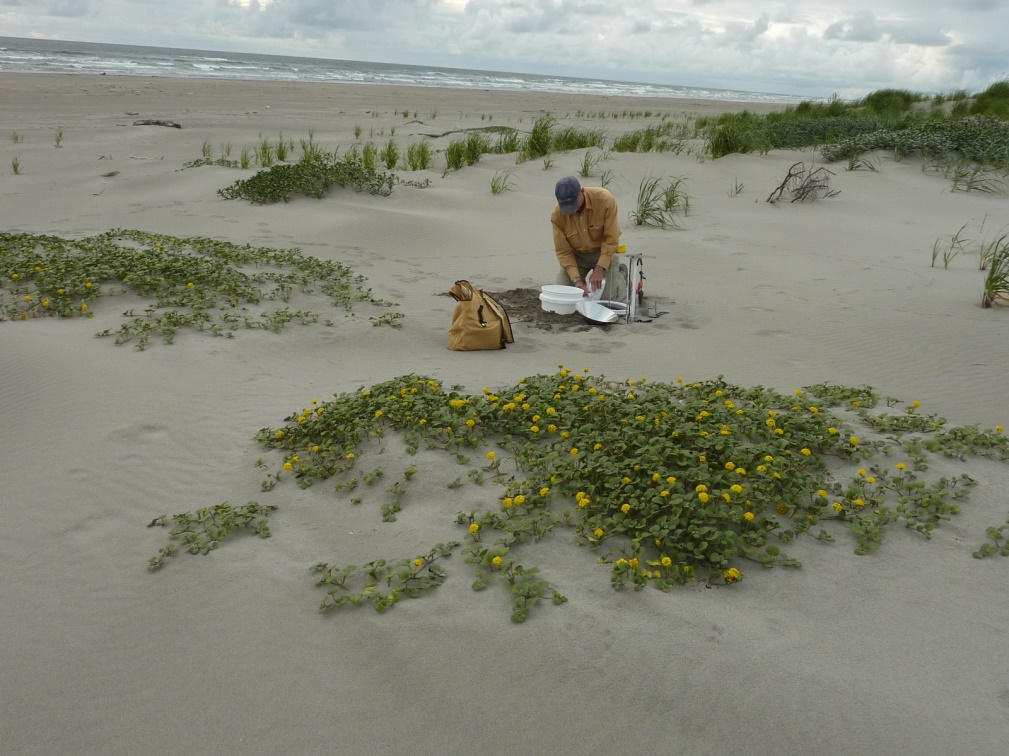
Figure 2 Preferred habitat of yellow sand-verbena, here Long Beach Peninsula, WA, US (Photo: Wendy Gibble), Used under a CreativeCommons CC_BY 2.0 licence)
This pickiness in the moth’s choice of host plant is the most probable reason that the sand-verbena moth is considered an endangered species under the SARA (Species at Risk Act), which is the official list of Canadian wildlife at risk. The label ‘endangered’ is put on species that are in risk of extirpation or extinction, meaning that the present populations of an ‘endangered’ species are the last in the wild. We do not know how many individuals of this moth species is left, but we do know that due to plant invasion, the number of sandy patches with yellow sand-verbena is decreasing, as other plants colonize the same habitat, thus keeping down numbers of yellow sand-verbena and keeping them from flowering. When the number or size of available habitats is lowered, the moth populations will naturally experience a decrease. Another reason for the loss of habitat is the proximity of the sandy patches to the shoreline that makes the patches at risk of suffering of erosion or flooding, and the use of dunes for military training that expose the plants to the risk of being trampled down. A more direct threat to the moth than the threat of habitat loss, is the spraying of Btk (Bacillus thuringiensis kurstaki) against the larvae of pest moths, or parasitic flies introduced (i.e. not from the “hood”) for the same cause.
But why should we care about this specific endangered species? It does not play any crucial part in the pollination of yellow sand-verbena, nor is it particularly important in the local food web or to the economy, so what would happen if it we took the laissez-faire approach and did nothing to help this species? It would probably disappear from some patches, and ultimately go extinct, as it has shown poor ability into dispersal on its own. But we can do something, and it may not even cost us a lot of money (that’s a good argument, eh?)! Approaches to help recovery the Canadian populations of sand-verbena moth include the protection of patches dominated by yellow sand-verbena by physically protecting the plants from erosion and trampling by training soldiers, by fencing the area (however temporarily), and the movement of yellow sand-verbena from patches where it has a low abundance (and so no sand-verbena moth population) to patches that are in risk of being dominated by other plants (with a moth population). Also, public outreach to the areas with populations of sand-verbena moth has been initiated, and the existing populations are being monitored. The Ministry of Environment of British Columbia considers the recovery goal of the sand-verbena moth, to maintain the populations at the current locations, to be feasible.
Sources:
SARA (Government of Canada): https://www.registrelep-sararegistry.gc.ca/species/speciesDetails_e.cfm?sid=789 25/11 2015
British Columbia Invertebrates Recovery Team. 2008. Recovery strategy for Sand-verbena Moth (Copablepharon fuscum) in British Columbia. Prepared for the B.C. Ministry of Environment, Victoria, BC. 18 pp.
CONTACTER LA SOCIÉTÉ
Assistant administratif : info@esc-sec.ca
SEC Président : ESCPresident@esc-sec.ca
This post is also available in: