By Dr. Staffan Lindgren, University of Northern British Columbia

————————

When teaching Invertebrate zoology, entomology or forest entomology, I am regularly asked by students if they can use common names. Mostly this request is precipitated by the perceived difficulty of memorizing, let alone pronouncing, Latin names. I am fairly relaxed about these things, particularly with forestry students, who are quite unlikely to become entomologists no matter how you define that term.  It should be clarified that forest entomology is taught within a Disturbance Ecology and Forest Health course at my institution (UNBC), with diagnostics in half of a separate lab course. My stock answer is thus that they may use common names as long as the name clearly defines the species they are referring to.

Foresters are prone to colloquial terms, whether with respect to insects, trees or other organisms. For example, subalpine fir (Abies lasiocarpa) is called balsam by many, if not most foresters in BC, even though it is a distinct species from balsam fir (Abies balsamea) of eastern North America. Similarly, Pissodes strobi, the white pine weevil, is called spruce weevil (a legacy of the days when this weevil was considered three separate species, two of which primarily infest different spruce species in the west) or simply leader weevil.  The reason, supposedly, is that it is the wood quality that matters in terms of trees, and the type of damage with respect to insects. The consequences of being a bit loose with the taxonomy of a particular species may therefore seem fairly inconsequential in forestry.

Incidentally, our forestry students have even more to worry about when it comes to pathology, which they have to learn at the same time, as the same biological organism often has two completely different Latin names (including genera) depending on whether it is the sexual or asexual form (why this remains an accepted practice is beyond me), and they often do not have common names. Add the fact that fungal species seem to change name more often than I change vehicles (I was going to write ‘shirt’, but didn’t want to gross anyone out making you think that I wear the same shirt for years), and it becomes rather a nightmarish proposition for the poor students.

When it comes to entomology in general, however, common names are most commonly used in casual conversation, particularly with members of the public. For entomologists this is usually not a problem, but for non-entomologists it can be very confusing.  For example, colloquial use of ‘bug’ is pretty much anything that is small and crawls or flies around. Taxonomically it is quite specific (Hemiptera: Heteroptera). Ladybugs (Coleoptera: Coccinellidae) are perhaps the most recognizable insects to people in general, but they are clearly not bugs. Plant lice (Aphidoidea and Phylloxeroidea), bark lice (Psocoptera) and body lice (Phthiraptera) represent three vastly different taxonomic groups. In addition, if the non-louse groups above were to be correctly written to show that they are not Phthirapterans, there should be no space – however for these common names that principle is never applied as far as I can tell. It is to differentiate dragonflies, damselflies, stoneflies, mayflies, whiteflies etc. from the true flies. For example, a dragon fly, if there were such a thing (and probably there is somewhere – perhaps a decapitating fly (Phoridae) comes close enough to earn that epithet!) would be a dipteran, whereas a dragonfly is not. How is a non-entomologist supposed to know that (assuming that it is important to anyone except us entomophiles)? Then we can go on to more obvious misnomers such as ‘white ants’, which aren’t ants (Hymenoptera: Formicidae) at all, but termites (Isoptera).

Going back to forest entomology, one can have all kinds of fun with some common names, the origin of some could serve as fodder for endless speculation. For example, when discussing the problems with common names, I ask my students what they think a sequoia pitch moth (Synanthedon sequoiae)(Lepidoptera: Sesiidae) would attack. The correct answer is naturally “mostly lodgepole pine, but not sequoia”. Similarly, the Douglas-fir pitch moth (Synanthedon novaroensis) commonly breeds in lodgepole pine, but as far as I know not in Douglas-fir. I then go on to western spruce budworm, which as the name does not imply primarily attacks Douglas-fir.

Myrmica brevispinosa, the short-spined ant

Myrmica brevispinosa, the short-spined ant

Clearly one cannot expect members of the public to keep track of Latin names of insects, so common names are here to stay. I was interested to find in a book I recently purchased (Ellison et al. 2012) that the authors had invented common names for every species by essentially translating the Latin species epithet. That creates an interesting situation vis-à-vis the attempt of entomological societies to standardize common names (http://www.esc-sec.ca/ee/index.php/cndb; http://www.entsoc.org/common-names). Nevertheless, some ants simply retained their genus name, e.g., Harpagoxenus canadenis became “The Canadian Harpagoxenus” (not sure why, as they named the genus “The robber guest ants”), Formica hewitti became “Hewitt’s ant”,  Myrmica brevispinosa (the species in the photo accompanying this article) is called “The short-spined ant”, and perhaps my favourite Lasius subglaber was named “The somewhat hairy fuzzy ant”. Common names aren’t generally that innovative, but Latin names certainly can be.

Many years ago May Berenbaum (1993) wrote a column on this topic. If students would all read Dr. Berenbaum’s eminently humorous take on how insects get named, they would without a doubt get a new appreciation for both Latin names and their creators, and perhaps feel less trepidation about memorizing them. Then not only true blue entomologists would be tempted to buy a bumper sticker that read “Sona si Latine loqueris” (Honk if you speak Latin) (Unverified from http://www.latinsayings.info/).

Berenbaum, M. 1993. “Apis, Apis, Bobapis….”, American Entomologist 39: 133-134.

Ellison, A.M., N.J. Gotelli, E.J. Farnsworth, and G.D. Alpert. 2012. A field guide to the ants of New England. Yale University Press, New Haven and London, 398 pp.
By Matthias Buck, Royal Alberta Museum, Edmonton

——————————————

For many of us who are working as taxonomists, describing new species has become somewhat of a routine. Sometimes it can even become a burdensome chore: I am thinking about those of us who work on hyperdiverse groups of insects in the tropics where almost every species is undescribed (case in point: one of my former lab mates recently described 170 new species of a single genus of Diptera in one paper!). However, the feeling is very different when new species unexpectedly show up in iconic groups that were thought to be well-known. Suddenly, common and familiar creatures turn into an exciting new research frontier, providing a fresh rush of adrenaline!

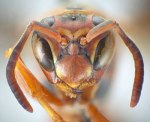
Mug shot of a female of Polistes hirsuticornis Buck. Vespidae Wasp

Mug shot of a female of Polistes hirsuticornis Buck. The hairs on the basal articles of the flagellum are longer than in related species (Photo credit D.K.B. Cheung & M. Buck).

This is what happened a few years ago when I started working on the vespids of the northeast. The family Vespidae (which includes mason wasps, paper wasps, yellowjackets and hornets) is most diverse in warmer parts of the World, as is the majority of stinging wasps. Doing a review of the northeastern Nearctic fauna therefore didn’t seem to be a very promising project for taxonomic novelty. Especially considering that the fauna of the eastern half of the continent is significantly less diverse and far better known than that of the west.

To my utmost surprise the study (published 2008 in the Canadian Journal of Arthropod Identification) not only turned up four new species of mason wasps but also two new paper wasps (Polistes). As you know, paper wasps are some of the most iconic species in the world of wasps, almost as much as their odious relatives, the yellowjackets. Further to that, they have received great attention as model organisms for the study of social behaviour and its evolution in insects. Finding not only one, but two new species in a group like this was beyond what I expected in my wildest dreams.

So how did it come to pass? As a novice to paper wasps I expected that reviewing the taxonomy of such a high-profile group would be like a walk in the park. Weren’t there scores of scientists before me who seemingly had no difficulties in identifying these sizeable and handsome insects for their behavioral studies, filling up cabinets of specimens in collections across the continent? Or so I thought! After months of fruitless staring through the microscope my nonchalant attitude gradually turned into frustration. One of the species, the common and widespread Northern Paper Wasp (Polistes fuscatus), was so variable that it blended virtually into almost every other species in the same subgenus. Previously published keys gave me a pretty clear sense of what typical specimens of each species look like, but where were the objective criteria that would allow me to identify the numerous intermediate forms? Truly, I found myself in a taxonomic quagmire!

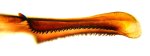
Aedeagus of Polistes parametricus Buck. Vespidae Wasp

Aedeagus (penis) of Polistes parametricus Buck. The size, shape and position of teeth is diagnostic with regard to P. fuscatus and P. metricus, with which this species was previously confused (Photo credit D.K.B. Cheung & M. Buck).

Grasping for straws I turned to three taxonomic methods that had not been applied to Polistes before: DNA barcoding, detailed study of male genitalic features and morphometric analysis. During the previous months, I had rounded up a number of puzzling specimens which represented the spearhead of my taxonomic headaches, and submitted them for sequencing. The results came back like a thunderclap, turning my anguish into cautious excitement: the DNA barcodes of these troublemakerswere clearly different from any of the described species. With renewed energy I launched into a detailed morphological study which led to the discovery of several new diagnostic characters, confirming the distinctness of these wasps beyond a doubt. A lot of hard work had finally paid off, and I was looking at the first newly discovered species of paper wasps in eastern North America since 1836 when Amédée Louis Michel Lepeletier de Saint-Fargeau described Polistes rubiginosus!

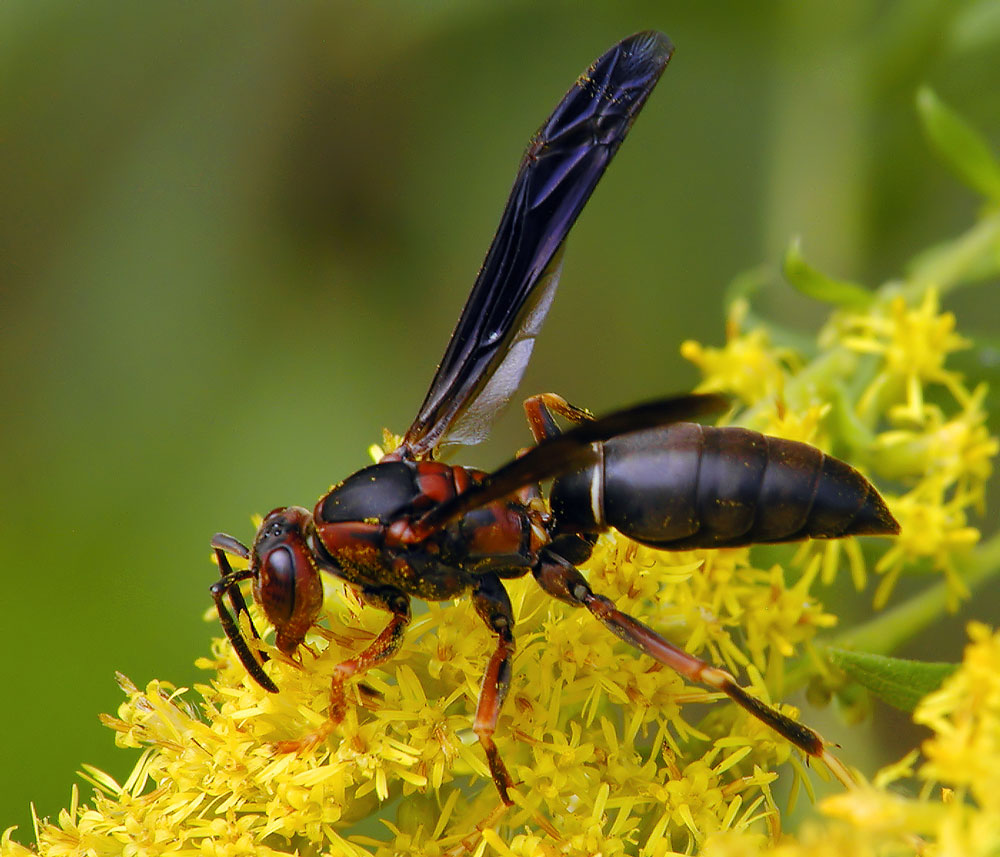
Female of Polistes parametricus Buck Vespidae Wasp

Female of Polistes parametricus Buck nectaring on goldenrod in West Virginia (Photo credit: Donna Race).

Since molecular methods, and in particular DNA barcoding, have received a lot of attention in recent years, it seems opportune to share some of my experiences working on Polistes. Unlike a few other taxa (such as spider wasps, Pompilidae), vespids sequence nicely and easily from pinned specimens, which makes them an ideal group for this kind of study. I found the sequence data extremely helpful but they certainly did not provide the cure of all taxonomic confusion. Barcoding uncovered an unexpected genetic diversity below the species level, which proved to be hard to interpret in the absence of other data. In Polistes there is no hint of a « barcoding gap », which postulates that genetic distances between individuals of the same species are (nearly) always greater than those between conspecific individuals. In fact, some of the species were genetically so similar that they differed by a mere 2 base pairs (out of 658). Nonetheless, the combination of molecular data with fine-scale morphology resulted in a quantum leap forward for Polistes taxonomy. Just days ago, I found out that a group of researchers in Germany and Switzerland are making similar progress on European paper wasps using a nearly identical approach.

My research paper on eastern Nearctic Polistes, including formal descriptions of Polistes hirsuticornis Buck and P. parametricus Buck, was published in the journal Zootaxa on October 1st.
Matthias Buck, Tyler P. Cobb, Julie K. Stahlhut, & Robert H. Hanner (2012). Unravelling cryptic species diversity in eastern Nearctic paper wasps, Polistes (Fuscopolistes), using male genitalia, morphometrics and DNA barcoding, with descriptions of two new species (Hymenoptera: Vespidae) Zootaxa, 3502, 1-48 Other: urn:lsid:zoobank.org:pub:6126D769-A131-49DD-B07F-0386E62FF5B9

Hi, my name is Holly Caravan and I am a PhD student in Dr. Tom Chapman’s social insect lab at Memorial University of Newfoundland. Currently my work is focused on galling aphids and their potential for antimicrobial activity within the gall. This past summer I visited Dr. Patrick Abbot’s lab at Vanderbilt University (Nashville, TN) where I was able to access three species of galling aphids. But, to address the ultimate goal of my research, I want to include the species Pemphigus spyrothecae which produces spiral galls on Lombardy poplar, Populus nigra. This species has a soldier caste which is morphologically specialized, different from the other three species I have already researched. I am looking for any information on locations of this aphid species in Canada; Newfoundland would be ideal, but my hopes are not high! Attached are links with pictures of the host tree and the spiral galls produced by the aphids. Any information would be greatly appreciated! I can be contacted at holly.caravan@gmail.com or hcaravan@mun.ca!

http://www.naturespot.org.uk/species/pemphigus-spyrothecae

http://www.parkwoodpines.com.au/html/lombardy_Poplar.html

Jacob Coates is an MSc student in the Chapman Entomology Lab at Memorial University of Newfoundland and Labrador.

—————————————

Cockroach – Photo by Jacob Coates

If you’ve never thought of visiting Australia, you’re making a terrible mistake. I just recently returned from a 6 month stint in Sydney based out of a Lab in Macquarie University. I carried out lab and field work on several species of gall-inducing thrips. I owe this great trip to the Australian Endeavour’s Awards, An Australian government run program which takes applications from students all over the world and to those lucky enough to be accepted, ships you to an Australian University with a wage, living allowance and travel cash. On top of getting some serious work done I enjoyed snorkeling around the many beaches, hiking in the Blue Mountains, and took part in the City 2 Surf road race where over 80,000 individuals take to the streets of Sydney to run the largest road race in the world.

Southern Queensland Red Road – Photo by Jacob Coates

In early June I completed a field trip into Southern Queensland to collect insect samples. Tenting through the outback presented some difficulties like torrential downpours, cold nights, and very sloppy road conditions (Nearly sinking a 4×4 in a flooded dirt road). Despite the problems, after nearly 2500 kms and 10 days of driving I returned to Sydney with thrips samples in hand and a very dirty truck to clean. Amazing wildlife, epic landscapes and great people await everyone in the outback, without a doubt the best trip of my life.

Jacob Coates

For those interested about the Endeavour’s award go to http://www.deewr.gov.au/International/EndeavourAwards/Pages/Home.aspx It’s well worth your time.

Today’s post is by Kate Bassett of Memorial University. If you’d like more information about her work, she encourages you to contact her.

——————————-

Hi,

I’m a graduate student at Memorial University (MUN, St. John’s, Newfoundland and Labrador), nearing the end of my masters…hopefully :). My research project is focused on a wildlife issue. Snowshoe hare, Newfoundland’s only Lagomorph, suffer from infection by California serogroup viruses (snowshoe hare virus and Jamestown Canyon virus). Helped by the province’s Chief Veterinarian Officer Dr. Hugh Whitney, I sampled the blood and tested for infection in wild hares and laboratory rabbits used as sentinels.  This work was based in part in the laboratory led by microbiologist Dr. Andrew Lang at MUN, as well as working with the team at the National Microbiology Lab headed by Dr. Michael Drebot in Winnipeg. But, my project also included studying mosquitoes that are thought to transmit these viruses. That part of my project was based in the social insect lab at MUN headed by Dr. Tom Chapman.

I spent two summers catching mosquitoes. Consequently, I can’t miss them. I seem to have permanently altered my hearing and vision such that a mosquito in flight always grabs my attention. Last May while putting in a load of laundry, a specimen alighted on the washer. I dropped everything and ran upstairs for my aspirator, and made it back to collect this girl to identify at work. I froze her and didn’t get around to id’ing until later in the summer, and I was shocked to see that it may be Culex pipiens. This mosquito gains attention on the East Coast of North America because it can transmit West Nile Virus, and when I made this determination the worst West Nile viral outbreak in N.A. was underway and centered in Texas. I was uncertain of my morphological identification, so I added a leg or two of this specimen to my DNA barcoding work, and I waited for the outcome. When the sequence confirmed by identification, I put out a press release, which had me immediately doing live interviews on TV and Radio. I didn’t have a lot of time to think about it, I just went from interview to interview. It was a good experience; I do recommend it. I should add that we don’t have confirmation of West Nile Virus in Newfoundland, but we don’t know what lies ahead. Drs. Lang (aslang@mun.ca), Chapman (tomc@mun.ca) and Whitney (hughwhitney@gov.nl.ca) are looking for students to pick up where I am leaving off.

Culex pipiens photo by Kate Bassett

Here’s a picture of Cx. pipiens I took using a digital camera mounted on a dissecting scope. I used the program Helicon for producing a wide focal plane. It’s not the one that I got in May and fingerprinted, but another one that I got last weekend (September, 2012), also in my house!

Insulin is perhaps best known as the crucial molecule whose lack leads to diabetes.  It’s a hormone that regulates carbohydrate and fat metabolism, and signals cells to increase uptake of glucose from the blood.  What most people don’t know is that insects use insulin too.

“Insulin signalling is a very conserved pathway which has been investigated extensively in humans as well as more recently in Drosophila melanogaster,” says Dr. Ana Campos, a researcher in the Biology Department at McMaster University.

And it turns out that in both insects and humans, insulin plays a much broader role in the brain than previously thought.  In a recent paper Dr. Campos and her technician Xiao Li Zhao published in the Journal of Experimental Biology, they showed that insulin signalling in the mushroom body (a critical region of the insect brain) regulates feeding behaviour in fruitfly (Drosophila melanogaster) larvae.

“Insulin has been implicated in a wide variety of biological processes. Its importance goes beyond its well-known role in the regulation of carbohydrate and fat metabolism, says Dr. Campos.  “In addition, it has been implicated in synaptic plasticity and cognitive function in humans and relevant animal models.  Recent findings indicate that abnormal insulin levels contribute to the development of neurodegenerative diseases.”

Image: Mushroom body in D. melanogaster (from Jennett et al. 2006, BMC Bioinformatics, doi:10.1186/1471-2105-7-544)

Investigating the role of insulin signalling in the mushroom body came about by a chance observation in their lab: they found a mutation in the Ran-binding protein M gene (RanBPM) that disrupted feeding behaviour in D. melanogaster larvae also inhibited insulin signalling.  Since this gene is also highly expressed in the mushroom body, it made sense to the researchers to investigate how the mushroom body influenced feeding behaviour and whether insulin signalling mediated it.

The researchers created a series of D. melanogaster strains with different parts of the known insulin-signalling pathway knocked out.  Then they measured the amount of food eaten by the different strains of mutant larvae as well as their resultant growth. By using immunohistochemical labelling, they also were able to find that reduced insulin signalling in the mushroom body on reduced the total number of neurons produced in the brains of these larvae.

Taken together, Dr. Campos and Xiao Li suggest their results mean that the mushroom body could be the brain region responsible for collecting signals about nutritional status in insects, and helps regulate feeding behaviour.  More broadly, this contributes to the knowledge about how insulin signalling impacts brain function.

Zhao, X. L. and Campos, A.R. (2012) Insulin signalling in mushroom body neurons regulates feeding behaviour in Drosophila larvae. J. Exp. Biol. http://www.ncbi.nlm.nih.gov/pubmed/22786647

Keywords: Physiology Fridays, Mushroom body, Insulin, Drosophila melanogaster, research blogging

By Brent Sinclair, University of Western Ontario
_______________________________

I’m currently on sabbatical in the Department of Zoology, University of Otago in Dunedin New Zealand.  This is the department where I did my PhD, so it is an opportunity to come back to familiar territory and re-connect with all sorts of people and places from the past.  It’s not a very insect department, but there is a lot of interesting work on ecology, parasites and freshwater biology.  A sabbatical is all about recharging scientific and creative batteries, so my main goal here is to write and read and think (and drink coffee and run and hike – but that’s for a different blog), but I felt that I also needed to justify coming all this way by actually gathering some data while I’m here.  Respirometry is the perfect answer – once set up, it’s possible to gather data on metabolic rates, breathing patterns and water loss at the expense of only a few minutes at each end of a run, leaving plenty of space for writing and drinking New Zealand’s excellent coffee in between.

What is respirometry?

Respirometry is the science (art?) of measuring the products and substrates of respiration – depending on your strategy, you can measure oxygen consumption and/or carbon dioxide production (to get a handle on metabolic rate) and water loss – among other things.  Because I work on generally small insects at generally low temperatures, we mainly measure carbon dioxide production and water loss (the instruments are much more sensitive), and can do some clever calculations to turn this into estimates of metabolic rate.

The equipment itself can look quite intimidating – and certainly like Science – with plenty of tubes and wires (when I calibrate the water channel, there’s even a bubbling flask!), but it’s not that difficult once you figure out what everything is doing, and it looks scary enough that other people generally don’t mess with it.  We pass CO2-free, dry air over an insect, and measure the CO2 and water vapour in the excurrent air – all the CO2 and water vapour must have come from the insect, so we can calculate how much it is breathing out.  The equipment we use is from a company in Las Vegas called Sable Systems International.  Sable Systems’ head honcho, John Lighton, is an insect physiologist who has published in places like Nature and PNAS, which means that when he designs the equipment, he often has insects in mind.

The respirometry system set up in a controlled-temperature room at the University of Otago. CO2-free dry air is supplied by the gas cylinder, and passes through a chamber containing the insect housed in a temperature-controlled chamber (the big grey cooler box), before going on to an infra-red gas analyser (the green box), which uses IR absorbance to measure CO2 and H2O.

What else can we learn from respirometry?

As well as a simple measure of metabolism, it is possible to use respirometry to determine the thermal sensitivity of metabolism (this is important in understanding the effects of climate change), as well as the metabolic costs of various environmental stresses, like freezing or chilling.  We can also use respirometry to study how insects breathe (there is much debate surrounding the adaptive significance of the Discontinuous Gas Exchange Cycles observed in some insects), and we can also use respirometry to figure out how much water is being lost across the cuticle of insects – even small ones like individual flies!

What am I …er… respirometing?

After 65 million years of evolution without mammals, New Zealand has an amazing array of endemism and some pretty weird insects.  My favourites are the alpine insects, which include impressive radiations of cockroaches, stick insects and weta – large Orthoptera related to the Jerusalem crickets of North America.  The mountains are fairly young (<3 million years old), so it’s possible to do all sorts of work comparing alpine species with their lowland relatives .

A group of alpine weta, Hemideina maori found under a stone at 1400 m a.s.l. on the Rock and Pillar Range, Central Otago, New Zealand. The males defend harems of 2-7 females. Female weta can weigh over 5 g, and males over 7 g, making them the heaviest insect known to survive internal ice formation. Photo by B. Sinclair.

Of course, it is the most fun to work on the big, weird insects.  So far I’ve been putting alpine weta (Hemideina maori, Orthoptera: Anostostomatidae) and New Zealand’s longest insect, the gloriously-named phasmid  Argosarchus horridus through their paces.  Male alpine weta can weigh up to 7 g, and are the largest insect species known to withstand internal ice formation.  The stick insects can easily reach 4 g, and posed some unique challenges in respirometry – with a body form so long and stick-like, it makes perfect sense to use a converted spaghetti-storage container!

A large female Argosarchus horridus (this one weighs a shade over 3 g) ready to go in her respirometry chamber. Photo by B. Sinclair.

The main questions I will be addressing will be about the evolution of thermal sensitivity and water loss in alpine insects, but the great thing about respirometry is that I never know what I’ll find along the way!

_____________________________________________________________

Brent Sinclair is an Associate Professor at the University of Western Ontario.  He is the 2012 recipient of the Entomological Society of Canada’s C. Gordon Hewitt Award.

Greetings fellow entomologists,

The 149th annual meeting of the Entomological Society of Ontario is fast approaching!

The venue: Bonnenfant Outdoor Education Centre, West Carleton, Ottawa, Canada.

The dates: September 28-30th, 2012.

Registration is now open at the official meeting website.

Submit your Posters and Oral Presentations before September 17th to be assured of getting onto the program.

Students: enter the President’s Prize competition and win cash!

Don’t be disappointed – register early as we are limited to 100 participants.

See you in September!

Bruce Gill
ESO President
Chair ESO 2012

By Chris Buddle, Editor-in-Chief, The Canadian Entomologist

———————–

As Editor-in-Chief for The Canadian Entomologist, I have the privilege of knowing what papers will be appearing in our journal in the future… in this post, without saying too much, I wanted to give you a ‘sneak peek’ of what to expect in the future.

First up, ground beetles (Carabidae) in eastern Canada:  Chris Cutler and colleagues studied the communities of ground beetles associated with wild blueberry fields in the land of the Bluenose (Nova Scotia).  They collected over 50 species in their study fields, and a high proportion of these species were not native (this is a pretty common trend with ground beetles in agroecosystms).   They also considered whether ground beetle communities differed between the interior and edges of their study fields – another important consideration in these systems.  In the discussion of their paper, the authors place their work in the context of conservation biological control.  It is a fascinating and important paper, and I know you will enjoy it when it appears on-line and in print.
In our Systematics and Morphology Division, you will soon see a paper by Art Borkent on biting midges (Diptera: Ceratopogonidae) in cretaceous amber.   In this paper, he describes two new species (and provides a key to the genus) based on specimens from many amber specimens.  These lovely flies are diverse and abundance in Amber, and in this case, Art Borkent looks into amber from southern Alberta.  This paper includes some lovely images and drawings, and you will be delighted when it appears in the journal.
Because I am quite fond of spiders, I am delighted to report that we will have a paper appearing about the dispersal behaviour of young Dolomedes triton (the ‘fishing’ spider), written by Carol Frost, Alice Graham, and John Spence.  The authors used a sophisticated laboratory set-up to understand the dispersal of this ubiquitous species, and tested what sort of cues could relate to the spider’s dispersal propensity.   It’s a very nice study, and one that will be of interest to the broader arachnological (and entomological) community.
Katherine Bleiker and colleagues at the Canadian Forest Service in Victoria BC will have a paper appearing in TCE about the mountain pine beetle -this destructive species is well known to the entomological community in Canada.  In this study, the authors investigated pre-emergence behaviours among females and completed this work completed this work in northern Alberta.  This area is in the ‘newly established’ habitat for the species, so it is important to fully understand the species and its behaviours at these locations.  This will be an exciting paper for researchers working on the mountain pine beetle, and we are delighted that it will appear in our journal.
Finally, I am pleased to report that one of our very own Subject Editors (Gilles Boiteau) will have a paper coming out in TCE on the Colorado potato beetle and its movement.   Gilles and co-author Pamela MacKinley using plant models to test how plant architecture affected the beetle’s movement patterns.  This is an important question given that management of this species in eastern Canada is a key priority, and a full and comprehensive examination of its movement behaviours provides important insights for researchers.
We have many, many more papers in our « production queue », but this little sneak peek will hopefully get you excited about our Journal.  You can view papers on-line by clicking here, and members of the Entomological Society of Canada have full access – another great reason to join the society!

Chris Buddle, Editor-in-Chief, The Canadian Entomologist
________________________________

I’ve been involved with the Entomological Society of Canada for a long time.  It’s a wonderful community of Canadian entomologists sharing an interest and enthusiasm for arthropods. The ESC’s activities are mostly centered around  its annual conference, its range of publications, and it offers a suite of awards and scholarships.  The society’s website also hosts career opportunities, photo contests, and a range of other rich and varied entomological content. The latest, big news for the society is that on 1 June, the ESC officially launched its own blog.  This blog was the brainchild of a few members of the society.

So…why does a scientific society need a blog?  What’s the benefit to members of the society, to the society itself, and what’s the benefit for the broader entomological community?  Here are some thoughts about this:

1) Visibility:  it’s a tough time for scientific societies – funding is tight, and for a lot of people, the value of memberships to societies may seem less important than it once was.  Therefore, increased visibility though an on-line presence is important. A static website is essential, but a blog has a fluidity and dynamic presence that is hard to match with a website.  An active blog with well-written and interesting content will do a lot to increase a society’s visibility.  The visibility from an active blog is also global in its reach.

2) Opportunities to contribute:  the ESC blog will have dozens of contributors – means anybody with an interest in entomology (regardless of their profession and educational background) has an opportunity to write something for a broader audience.  Blog posts are often easier to write, they are shorter than research papers, and the content need not be vetted through a peer-review process.  It’s a forum for creative ideas, stories, photographs, and fun facts about insects.  The blog already has a couple of nice examples to illustrate this point.  For example, Chris Cloutier, a naturalist at the Morgan Arboretum on the Island of Montreal, just wrote a lovely post about the Hackberry Emperor.  Chris is an example of a different kind of entomologist – he’s not a research scientist, nor is his primary profession Entomology.  However, he does outreach, has a wealth of expertise and  talent, and he has a lot to offer the entomological community.  These kind of opportunities create an environment of inclusion for a society – members have a voice and can share their ideas and expertise.  Non-members can also contribute and recognize that there is a strong community associated with the ESC (…and perhaps some of the non-members will see the value of the society and join).

3) Economics: more than ever before, scientific societies are struggling to maintain members, and balance their books.  A blog is a cheap and effective way to promote their science to the world and the cost can be as little as a domain name.  I can think of no other method by which a society can promote itself at this cost point.  You could even argue that the time for static websites may be coming to a close since they are costly to host, require people with specific technical skills, and require a lot of back-end support.  The good blog sites can be administered by people with relatively few of these skills (I’m proof of that!!).

4) Marketing and branding:  a high quality blog helps a society get its brand to a broad audience, and helps to market the society to the world.   The ESC has a long and wonderful history, but its main audience over the years has mostly been academics, research scientists, and students of entomology.   The ESC brand has excellence and quality behind it and that kind of brand should be shared, expanded, and through this process, the society will hopefully gain positive exposure and more members.

5) Communication: At the end of the day, knowledge is something to be shared.  Scientific communication is a fast-changing field and one that is making all of us reconsider how we talk and write about our interests.   I think we all have a responsibility to do outreach.  There is so much mis-information out on the Internet, and people with specialized and well-honed skills must be heard and must have a means to share accurate information in a clear and effective manner – e.g., a society blog. I also think many entomologist are perfectly positioned to do effective outreach (I’ve written about this before).  Part of the ESC’s mandate is dissemination of knowledge about insects and social media is a key piece of any communication strategy.

What do you think?  Can you think of other reasons why scientific societies need to embrace social media?  Please share your ideas!

I will finish with a stronger statement:  scientific societies are perfectly positioned to have the BEST blogs on the Internet.  A scientific society is a community, a community with history, and a community built on high level of expertise.  A scientific society also provides a structure and framework for bringing together high quality knowledge about a particular topic.  A blog can be amazingly strong with this kind of support.  A society is also about people and these people work tirelessly behind the scenes to facilitate the dissemination of high quality content.   These people, structured in committees, and with oversight from an executive committee, can provide tangible support that will help to keep a blog from becoming unidimensional.  The ESC’s blog administrators (Crystal and Morgan) know how to keep the content of high quality, and know how to put all the pieces together – and they know they can do this because they have an entire community behind them.  The society is committed to supporting the blog and for that reason, there is reason to be optimistic about its long-term success.

___________________________

Originally posted at: http://arthropodecology.com/2012/06/13/why-a-scientific-society-needs-a-blog/